• Feed RSS
Showing posts with label alternative medicine. Show all posts
Recently, I learned of some shocking statistics:
* Every year, pharmacies dispense 257 million prescriptions for opioid painkillers — one for every adult American.
* While the U.S. makes up less than 5 percent of the world's population, Americans consume 80 percent of its total opiate supply.
* 1/3 of people who used illicit drugs for the first time start by using a prescription drug.
* Prescription narcotics kill 6 times more people per year than heroin.

As an emergency physician, I prescribe narcotic drugs for pain every day. I began to wonder how complicit doctors are in furthering this epidemic of prescription drug abuse.

My recent article in NPR explores this struggle, between relieving people's pain, and possibly fueling this worsening epidemic.


When a Prescription for Pain Becomes a Gateway to Addiction


Please read, and comment! I'd love to hear your thoughts.

It’s been two and a half months since the publication of my book, When Doctors Don’t Listen: How to Avoid Misdiagnoses and Unnecessary Tests, and I’m exhilarated and exhausted. Since January, I have been traveling around the country to talk about why it’s so important for doctors to listen and how patient empowerment can transform medical care. The reception to these messages has been excellent, and I’m very grateful to my colleagues around the country for inviting me to speak.

Having given dozens of talks on When Doctors Don’t Listen, I can predict most audience questions. Invariably, someone will ask about medical malpractice: aren’t doctors just protecting themselves by ordering more tests? (My response: the primary cause of malpractice is lack of communication, and tests don’t replace communication.) There will be another question about how the medical profession has reacted to the book. (My response: quite well—who wants to admit that they’re the doctor who doesn’t listen?)

There is one more question that is consistently raised, from Boston to Los Angeles to St. Louis to Cincinnati, one that I wouldn’t have predicted. What do you think about integrative medicine, someone will ask. Why don’t doctors advise patients on other options beyond pills and CT scans? What about treating the whole person, and preventing disease from occurring in the first place?

This question surprised me, as did my lack of knowledge of how little I actually knew about integrative medicine. Even though I was born in China, a country steeped in combining Western practice with Eastern philosophies, my medical training has been exclusively from conventional Western institutions. I cannot recall one course during medical school or residency that focused on complementary medicine or holistic care, or anything other than the disease-oriented model of Western medical care.

In fact, it wasn’t until I was asked this question during my book tour that I began looking into the concept of integrative medicine. I learned that integrative medicine is not synonymous with complementary and alternative medicine, but rather is “healing-oriented medicine that takes account of the whole person (body, mind, and spirit), including all aspects of lifestyle. It emphasizes the therapeutic relationship and makes use of all appropriate therapies, both conventional and alternative.”

This sounds like the type of medicine that all doctors should all strive to practice, and all patients strive to receive! In the words of physician and noted humanist Dr. Abraham Verghese, integrative medicine isn’t “wedded to a particular dogma, Western or Eastern, only to the get-the-patient-better philosophy.” Indeed, millions of patients in the U.S. and around the world embrace this holistic medical practice, and the pioneers of integrative medicine, such as Drs. Andrew Weil, Bernie Siegel, Deepak Chopra, and Dean Ornish, are widely revered.

Yet, from my own experience, I know that integrative medicine is not something we are teaching future doctors. I can also see that, based the persistence of this one question asked around the country, patients are hungry for knowledge on what they can do that goes beyond our Western concepts of disease. Instead of prescribing a pill for blood pressure and cholesterol, what is an exercise regimen that I can try first? Is there an alternative to surgery for my back pain, including yoga and massage? How can doctors coordinate my care with more “traditional” healthcare providers like nutritionists and physical therapists, as well as more “alternative” providers such as acupuncturists and naturopaths? Health is not just about illness, but about prevention and maintaining wellness—how can patients partner in all aspects of their health?

I am in the midst of writing a series on medical errors that occur in the hospitals. We know that conventional Western medicine can save lives, but we also know that medical error happens far too frequently. We also know that 30% of all tests and treatments are unnecessary. Patients are seeking an alternative approach to health. They want information about prevention and natural approaches to health. They want to talk to their doctors about it, but are finding that their doctors—like me—know precious little about integrative care.

During my research in China last summer, I spent some time observing the practitioners of Traditional Chinese Medicine, who were adept at integrative medicine. Unfortunately, this, and my brief but educational visit to Emperor’s College, an oriental medical school in California, is the extent of my interaction and knowledge of integrative medicine.

Now that the book tour is coming to a close, I am looking to learn more about the surprising topic that has emerged and to think more about how to educate conventionally trained doctors like myself to practice a holistic approach to patient care. Please reply with your suggestions for resources. Include links. Recommend books. Suggest places for me to visit, virtually and in person. Contribute your experiences. I’ll post more from my journey in this blog.

As a child growing up in China, I was always aware of Traditional Chinese Medicine (TCM). TCM is what we refer to as Eastern medicine, in contrast to the Western medicine we know from U.S. hospitals. I never understood much about TCM, only that it somehow involves herbs and that many Chinese people believe in it. The more I progressed in my medical training in major U.S. academic centers, the more distanced I felt from TCM. Why should I learn about something that lacks evidence, when there’s so much to know about for which there is good research?

For the last month, I have been in China studying its medical education system. While my study is primarily on its Western medical system, I have been so fascinated by what I learned of Eastern medicine that I spent many free evenings observing TCM practitioners. There is so much I didn’t know. For example, I had no idea that many TCM doctors in China undergo rigorous medical training, and actually take the same courses as Western medicine doctors in addition to courses in herbs, acupuncture, cupping, etc. As a discipline, TCM is far too complex for me to understand in my short observation, but there are some very important “lessons from the East” that are applicable to our Western medical practice:

#1. Listen—really listen. The first TCM practitioner I shadowed explained to me that to practice TCM is to “listen with your whole body”. Pay attention and use every sense you have, he said. I watched this doctor as he diagnosed a woman with new-onset cervical cancer and severe anemia the moment she walked into his exam room, and within two minutes, without blood tests or CTs, sent her to be admitted to a (Western) medical service. I’ve seen great emergency physicians make quick diagnoses and disposition decisions, but this was something else! “How could you know all of this?” I asked. “I smelled the cervical cancer,” he said. “I looked and saw the anemia. I heard her speak and I knew she could not care for herself at home.” (I followed her records in the hospital; he was right on all accounts.)

#2. Focus on the diagnosis. I watched another TCM doctor patiently explain to a young woman with long-standing abdominal pain why painkillers were not the answer. “Why should we treat you for something if we don’t know what it is?” he said. “Let’s find out the diagnosis first.” What an important lesson for us—to always begin the diagnosis.

#3. Treat the whole person. “A big difference between our two practices,” said one TCM doctor, “Is that Western medicine treats people as organs. Eastern medicine treats people as a whole.” Indeed, I watched her inquire about family, diet, and life stressors. She counseled on issues of family planning, food safety, and managing debt. She even helped patients who needed advice on caring for the their elderly parents and choosing schools for their child. This is truly “whole person” care!

#4. Health is not just about disease, but also about wellness. There is a term in Chinese that does not have its exact equivalent in English. The closest translation is probably “tune-up to remain in balance”, but it doesn’t do the term justice, because it refers to maintaining and promoting wellness. Many choose to see a TCM doctor not because they are ill, but because they want to be well. They believe TCM helps them keep in balance. It’s an important lesson for doctors and patients alike to address wellness and prevention.

#5. Medicine is a life-long practice. Western medicine revers the newest as the best; in contrast, patients revere old TCM doctors for their knowledge and experience. Practicing doctors do not rest on their laurels. “This is a practice that has taken thousands of years to develop,” I was told. “That’s why you must keep learning throughout your life, and even then you will only learn just a small fraction.”

#6. Evidence is in the eyes of the beholder. Evidence-based medicine was my mantra in medical training, so I was highly skeptical of combinations of herbs that are supposed to have some curative effects. But then I met so many patients who said that they were able to get relief from Eastern remedies while Western treatments failed them. Could there be a placebo effect? Sure. Is research important? Of course. But research is done on populations, and our treatment is of individuals. It has taken me a while to accept that I may not always be able to explain why—but if it helps the patient, that’s what’s important. “In a way, there is more evidence for our type of medicine than for yours,” a TCM teacher told me. “We have thousands of years of experience—that must count for something!”

There is so much I have not covered about TCM. Its practices vary regionally, and no doubt, there are more and less capable practitioners (as there are in Western medicine). More research into TCM methods will be important. However, regardless of whether we Western doctors want to prescribe TCM treatments, we should recognize there is much to learn from Eastern medicine, including what it means to be a physician to really care for our patients. A month into my China trip, I, for one, have a newfound appreciating for Eastern philosophy and medical practice.
Got a headache? You’re not alone. Headache is the most common symptom that patients go to their doctor for. Nearly 10% of Americans suffer from regular migraines, and nearly a third of people report having a severe headache within the last three months that interfered with their daily activities.

Here are 6 ways to get rid of your headache.

#1. Rest. Most people feel better after closing their eyes and lying down. This is a common treatment for migraine sufferers, and for people with stress-induced headaches. Most of us will benefit from a rest, so find a dark place and close your eyes.

#2. Relax. Even more common than a migraine is headache induced by tension. However, especially for those who are accustomed to living a stressful life, relaxing is easier said than done. So try various techniques. Head-stretching and breathing exercises may help, as can massages, yoga, and meditation.

#3. Drink. Water, that is. Dehydration contributes to headache, and this is a problem you can fix yourself Drink two glasses of water when you feel like your headache is starting; this can help to curb it before it gets worse.

#4. Exercise. If your head hurts, exercise may be the last thing you want to do. For some people, particularly those who may have tension headaches, exercise can really help their symptoms. Regular exercise can also help prevent headaches from occurring, so try to build in at least 30 minutes of aerobic exercise four times a week.

#5. Take anti-inflammatory medications. Tylenol and Ibuprofen can reduce headache symptoms. Take 650mg of Tylenol and 600mg of Ibuprofen when your symptoms first start. It’s OK to take these together, and to repeat in 6 hours if you need. Be careful that other products can contain these ingredients, in particular Tylenol (acetaminophen): check the label of other medications you’re taking to make sure you are not overdosing on it.

#6. Consider alternative treatments. Though there is no clear evidence that alternative therapies are effective for headaches, some people have great results from acupuncture, for example. Certain teas, such as peppermint and lemon-ginger, have also been associated with alleviating headaches.

Of course, it’s always important to be on the look out for more serious causes of headache, for example, sudden onset of the worst headache of your life, fever, numbness, weakness, vomiting, or other concerning symptoms. Know that everyone is different, and you should try various therapies to see what works for you. Finally, as with everything, prevention is the best medicine, so sleep well, de-stress, and practice other good lifestyle habits!

I welcome your comments! What are other things you’d like to know more about?

Most patients I see are surprised to find out that there’s something they should have brought to their doctor’s visit. Granted, I’m an emergency physician, and many of my patients come to me in emergency situations that they can’t plan for. However, most people have some heads-up for going to their doctor. Certainly if you’re going to your annual check-up or a routine appointment, you should bring these items with you. Keep this checklist readily accessible; even if you’re going to the hospital for an emergency appointment, aim to take the following 10 items with you:

#1. A medical card. It would be ideal for every doctor to have a full list of your medical history, but our country is not even close to having a nationally accessible medical record system. To make sure your doctor has your information available, carry a card with you. You can find many cards that easily downloadable on the Internet where you list your medical problems, surgeries, doctor’s names, insurance, and allergies. Especially if you are seeing a coverage doctor or visiting the E.R., he or she may not have your medical record. This makes sure that your doctor can see your most critical medical information.

#2. Changes to your medical record. If you have had recent test results since you last saw your doctor, bring these with you. Even if it was your doctor that you’re going to see who sent you to get the test, bringing the results will make sure that they are discussed during the visit.

#3. Your medications. Very often, patients come in and say that they can’t remember what they’re taking. “I think I stopped taking the pink tiny pill, but I’m still taking the white one and the blue one,” is not as helpful as actually seeing the actual bottles with the labels on them. Take all your medications, put them in a bag, and bring them with you. Tell your doctor if you’ve stopped taking any of your medications, and be honest if you haven’t been taking them as much as you were supposed to. Otherwise, your doctor may assume they’re not working, and prescribe you even more!

#4. A list of alternative therapies. The majority of our patients use some type of alternative therapy. It is better for your doctor to know about it. Most doctors are not experts in herbal therapies, but it’s useful for them to know what’s your taking in case there are some interactions with your other medications. Keep a list of fish oil, vitamins, and supplements that you’re using, and a record of any visits to chiropractors, naturopaths, or other practitioners.

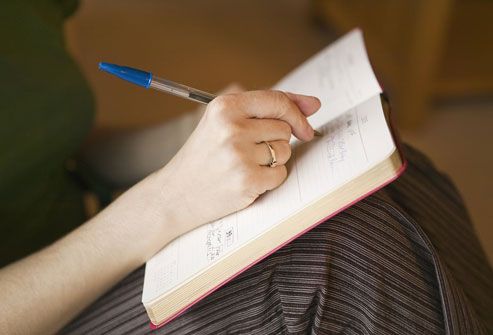
#5. A journal of your symptoms. If you have a chronic condition, or if you have a new symptom you’re concerned about, you should be keeping a journal that documents your symptoms and how it is throughout the days and weeks. Your doctor may also ask you to keep track of your response to treatments you’re doing at home. Sometimes, there are objective measures that you need to write down, such as your blood sugar. Bringing the journal with you to your appointment can help remind you of your story, and allows for your doctor better understand what’s going on and how your symptoms affect your daily life.

#6. A list of your questions. You should always come prepared with a list of questions to ask your doctor. Brainstorm the list well before your appointment, and have a concise list of questions, starting with the most urgent that you must get answered. Don’t leave your doctor’s office without asking them.

#7. A notebook and pen. This may seem obvious, but your doctor may not always have writing equipment readily accessible, and it’s important to have a notebook and pen to take notes. Write down things that don’t make sense, and ask for clarification. If there are words mentioned that you’ve never heard of, ask your doctor to spell them. At the end of the visit, ask for a verbal summary. Make sure you write down and understand your plan.

#8. A family member or a friend. Having someone with you will give you support and company during the appointment. As importantly, they can help remind you of your questions and concerns, and is another measure to help ensure your doctor answers all the questions that you have.

#9. A smartphone. Everyone seems to have some kind of smartphone device: an iphone, a blackberry, an ipad. There will downtime when you’re waiting. Use this time to look up what your doctor has told you. The smartphone also keeps you busy if your wait is particularly long!

#10. Some snacks. Often, there are limited food options are the doctor’s office, and you may be waiting for some time. Unless you’re told not to eat, or have a complaint that you’re not sure how it will go, having something on hand can help make you feel better.

I hope this list is useful for you as you prepare for your next doctor’s visit. Please give me feedback: what’s on the list that you find helpful? What’s not on the list that should be? And what would you would like to hear about next?