• Feed RSS
Showing posts with label medical error. Show all posts

The law says yes. Prior to 1996, patients had to sue to see their own records. Since HIPAA—the Health Insurance Portability and Accountability Act—patients are guaranteed by law to have access to their records. However, the process for getting medical records is often so cumbersome that people don’t look at them, and usually not well after their medical visit.

In my medical training, I learned that the medical record is a tool for doctors to communicate with each other. But could it be harnessed as a collaborative tool for patients?

When Patients Read What Their Doctors Write

My latest NPR article discusses ongoing national experiments to provide open access to patients not only of their test results, but also their doctor’s notes. Participating doctors were initially opposed to the concept, but the results from the experiment have been striking:
·      80% of patients who saw their records reported better understanding of their medical condition and said they were in better control of their health;
·      Two-thirds reported that they were better at sticking with their prescriptions;
·      99% percent of the patients wanted OpenNotes to continue

When patients see their records, there's more trust and more accuracy. But that doesn’t mean that OpenNotes is a panacea. There are new controversies that are arising. I address them in this article, and also on Weekend Edition. Listen here for the interview with legendary journalist Linda Wertheimer.

What do you think? Should patients have full access to what their doctors write about them?

One year ago today, my book, When Doctors Don’t Listen: How to Avoid Misdiagnoses and Unnecessary Tests, was published. My goal in this last year has been to travel around the country and talk about the book and its message of advocating to improve your health. I planned a 48-city itinerary where I’d crisscross the U.S. from Massachusetts to California and back. I’d speak at bookstores, libraries, nursing homes, universities, and community centers.

What I didn’t anticipate was that this “speaking tour” would turn into a “listening tour”. 

From Boston to Los Angeles to Lexington to Cincinnati, people told me about their experiences with healthcare. Some, like 62-year old Annie from San Francisco, thought of themselves to be “e-patients”, or empowered patients. “I have a rare rheumatological illness that very few doctors have encountered,” she told me. “I bring research articles and educate my doctors.”

Others avoid doctors, like Janet, a 48-year woman from St. Louis who believes in “prevention, prevention, and prevention.” However, like many others I met, she sees healthcare providers nearly every week because she’s a caregiver to her elderly parents and her three children.

Over 2,000 people shared with me their frustrations with doctors, insurance companies, hospitals, and the healthcare system. I listened and learned.

Here are 10 themes that emerged: 

People don’t know that they have options, especially when it comes to saying no. They are used to doctors telling them what they need; they are surprised when I mentioned that patients always have a choice to NOT get a test or NOT take medications. Few interventions are so emergent that patients need to obtain them immediately. Watching and waiting, discussing it further with the doctor, and obtaining a second opinion are reasonable alternative. 

People want to please their doctors. In general, people like their doctors. Many feel they have to do what the doctor wants out of fear of displeasing them. “I lie and say I take medications I can’t afford,” 75-year Tony from San Antonio said. Others expressed their need for doctors to support their decisions. “Give me real choices and mean it,” says 38-year old Teresa. “Don’t judge me as being noncompliant just because I have a different value system.” 

People don’t want more care—they want right care. People recognize the harms of overtesting and overtreatment, and know that more care isn’t always better. They know to be wary of industries with ulterior motives. “Drug companies and insurance companies aren’t operating out of the goodness of their hearts,” says Joseph, a 55-year from Providence. “There’s a lot of money to be made money from healthcare.” They also fear rationing, and caution that less isn’t more either. What they want is the right care, without personal or commercial interests getting in the way. 

People don’t expect perfection, but they demand transparency. They know that doctors aren’t omniscient; they just want them to share what they know. Uncertainty is fine, as long as they are told the truth. Also, people accept that doctors are human and that medical errors occur. They don’t aim for retribution, but they do want disclosure of the mistake and to know that the doctor is committed to addressing it. 

People want more information to choose doctors and hospitals. “It’s disgraceful that I can find all types of information on choosing a coffee shop but I know next to nothing about my doctor,” 35-year old Jenny from Cincinnati says. People want to know about their doctors, not only their credentials, but also any financial conflicts of interests, their values, and who they are. 

People know that hospitals aren’t hotels. They don’t expect valet parking and 3-course meals, but they do want to be treated with respect. If they’re cold, they want a blanket. If they’re thirsty, they want some water. Without compassion and addressing basic human needs, marble staircases and fancy MRIs are worthless. The same goes for doctors’ offices. Forget the fancy carpeting, but find staff who treat people with humanity and dignity. 

People will wait if they get what they need. The dogma based on patient satisfaction survey results is that higher wait times leads to unhappy patients. However, the people I spoke with are unhappy not because they had to wait, but because they did not get what they expected despite the wait. “I waited two hours, and the doctor just spent five minutes with me,” said 49-year Sophie from Plymouth. Studies show that patients are interrupted in about 12 seconds; it’s no wonder people feel ignored and not listened to! 

People aren’t lazy when it comes to their health, and don’t always want the quick fix. Most people don’t want to go to their doctor at all, and prefer to find ways to improve their lifestyle and prevent disease. The popularity of diet and fitness books is case in point. Many do not want “the easy way out” in the form of drugs or surgery, but would rather discuss fitness, diet, and use of alternative therapies with their doctor. “It’s my doctor who doesn’t want to discuss these therapies with me,” says 22-year old Sandra.


With Dr. Jocelyn Elders and advocate Patty Skolnik
People know that the current system is unsustainable. No matter the politics, people saw the healthcare system as being broken, and all of them as victims—and future change agents. “It’s just like the environment: there are finite resources,” I heard over and over. Since “free” and “cheap” weren’t synonymous with good care, people are willing to pay out of pocket for better value (as long as it doesn’t bankrupt their family). They are willing to share in the cost to society, because they recognize they already are.

People crave connection and caring. They want face-to-face interaction with “their” doctor. They want to be listened to and heard. Knowing their medical history is only the start; they also want their doctors to understand and connect with them emotionally, physically, and spiritually. This requires a sustained relationship; people do not want to go to “minute clinics” or use smartphone apps to access their doctor, but rather long for a long-standing relationship with an accessible, trustworthy provider.

By no means is this list meant to be exhaustive or intended to represent every one of the individuals I met. The very nature of healthcare is that it is personal and individual. These findings represent the thoughts and wishes of a broad spectrum of people across the U.S. They challenge conventional wisdom when it comes to what is needed in healthcare. For example, the rise of urgent-care centers and smartphone apps should be seen as failure, not progress. Similarly, reducing wait times or adding fancy office furniture is not the fix for patient dissatisfaction.

Reform proposals tend to target policy changes that become mired in rhetoric and statistics. What people want is more basic, and more achievable. Doctors need to be transparency and honest with patients. They need to move away sick care towards healthcare. 

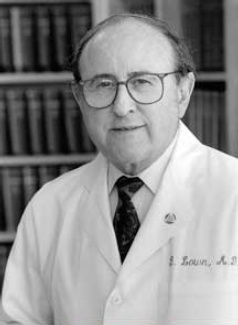
In the words of the great humanist and cardiologist Dr. Bernard Lown, we need to “do as much as possible for the patient, as little as possible to the patient.” Medical students need to learn shared decision-making and integrated care. Patients—people—should be part of every healthcare debate. Ultimately, we must restore medicine to being a caring partnership that prioritizes basic human dignity and respect. 

My listening tour continues. Please share your thoughts below. I look forward to listening and learning.

I just returned from a thought-provoking conference at Dartmouth. Entitled Preventing Overdiagnosis: Winding Back the Harms of Too Much Care, and co-sponsored by Dartmouth University, British Medical Journal, Consumer Reports, and Australia’s Bond University, the conference raised many points that are rarely discussed.

Here are some of my favorite quotes:

“Risk factors have been turned into diseases.” Dr. Steve Woloshin discussed the absurdity of labeling us all with a “pre-disease”: doesn’t everyone all have some version of pre-hypertension, pre-diabetes, or even pre-death? More insidious is the promulgation of testing people who have no symptoms, despite of evidence of harm. American Cancer Society’s Chief Medical Officer Dr. Otis Brawley discussed how hospitals offer “free” screening tests knowing that they will lead to false positives, thus creating a market for more testing and more care.

“Diseases are being created for the purpose of selling medications.” Dr. Lisa Schwartz told the story of how GlaxoSmithKline created a new disease entity—restless leg syndrome—to find a new use of a Parkinson’s disease medication that was about to go off patent. Roy Moynihan showed his class spoof video of a new and dangerous epidemic.

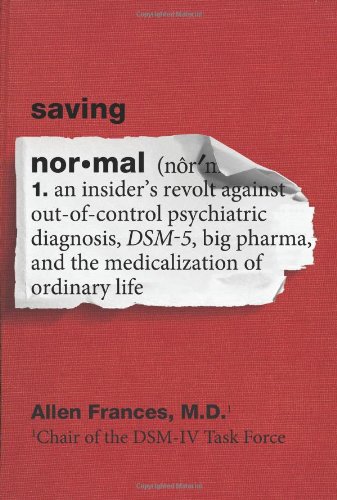
“Ordinary experience is medicalized.” Dr. Allen Frances, a psychiatrist and Chair of the DSM4 task force, rails against the psychiatric profession for labeling people with diseases they don’t have. If you are grieving two weeks after the death of a spouse, you have depressive disorder; if your child is inquisitive and energetic, he has attention deficit disorder. Of course, watchful waiting is never the solution, but fortunately, there is a new and expensive medication for this disease.

“Language corrupts thought.” A diagnosis of “carcinoma-in-situ” brings up scary connotations and fuels the desire for aggressive treatment. However, our technologies have gotten so advanced that we are detecting many early cancers that, if left alone, may never grow or harm the patient. The National Cancer Institute recently proposed a change in terminology for cancer, and other conference speakers proposed other disease definitions that should be changed.

“We are practicing faith-based medicine that ignores the harms and exaggerates the benefits.” It is well-documented that medical journals bias in favor of positive results, and that there are many financial interests to promote the newest, latest medication or treatment. Stories abound about people who survived because of early detection of disease and new, experimental treatment. However, there are also many stories of people who experience serious side effects and fatalities from overdiagnosis and overtreatment. These counternarratives need to be told, and evidence for harm needs to be published.

“Overdiagnosis is a symptom of the same problem that drives underdiagnosis and misdiagnosis.” In the discussion of overdiagnosis, it’s important not to forget that there are other pressing issues too, including medical error and lack of access to healthcare. The medical industrial complex is at fault here, too, and doctors need to assume our social responsibility and moral imperative to do what’s best for our patients.

“More care isn’t better care; it’s just more care.” In the words of my hero, cardiologist and Nobel Peace Prize winner Dr. Bernard Lown: “Overtreatment harms patients, thereby negating the first principle of doctoring, primum non nocere.” Our goal in medicine should be to do “as much as possible for the patient, as little as possible to the patient.”

There will be many challenges ahead for conference attendees, including the difficulty of framing and discussing the problems of overdiagnosis and overtreatment. Much of this conversation will continue at the Lown Institute's Right Care Alliance conference in December. My next few blog articles will address these difficulties. Stay tuned, and please feel free to contribute your thoughts below!

This is a special guest post from contributor Marcela De Vivo. 

One month ago, my son had major hip surgery at a major children’s hospital in southern California. I was so pleased when he came out of surgery without any complications.  “The worst is over,” I thought.

Little did I know that the worst was about to begin.


The day after his surgery, I noticed Nathan’s vital signs were erratic. He looked a little bit too pale and sluggish. I mentioned my observations to his nurse, who called the doctor. I requested for them to draw blood and look at his numbers. The doctor did not listen. No blood was drawn, and my son was left alone to continue his “recovery”.

The following day, Nathan wouldn’t wake up. Again, I told the doctors my concern and asked for blood work, but was once again ignored. As the day continued, my son became more and more pale. His heart rate was consistently elevated, and his respiratory rate became lower and lower. Then, it happened—his oxygen saturation dropped below 70 and he turned blue. Doctors rushed in and finally they realized that something was seriously wrong. 

This time, they drew his blood. Sure enough, the results showed that he was severely anemic. He had lost a lot of blood during surgery and needed a transfusion. Fortunately he recovered and no major damage resulted. 

This experience highlights a lesson I learned long ago as a mother of a severely disabled child: advocacy is KEY. This is just one of many lessons I’ve had the opportunity to learn. I’ve learned to find ways to help my son engage with his environment, to allow him to participate with other children his age, and to speak up for him against a school district that thinks him “unteachable.” 

I’ve learned, too, that your role as a caregiver is fundamental in the physical and emotional well being of the person you are caring for. Learning to be a better caregiver can help reduce the inherent stress that comes from so great of a responsibility. A good caregiver cares about the dignity, welfare and feelings of the recipient of the care.

Here a few ideas I’d like to share with you that you can improve your experience as a caregiver, as well as the experience of the person you are caring for: 

Patient Care

Do treat your patient/loved one with respect and dignity. Although your patient/loved one may revert to childlike behavior, he/she always needs to be treated as an adult. It could be demeaning to them to be treated as somehow lesser as a result of symptoms from the illness. Treat them as you would want to be treated yourself if you were receiving the care.


Don't assume that the care-receiver has nothing to contribute. Again, always treat your loved one with respect. He or she may be disabled in some ways, but that is not to say that they are useless and helpless as well. Even if they are not able to do much for themselves, give them every opportunity to cooperate in their own self-care. My son is unable to speak, but is able to answer yes by blinking and no by shaking this head. Through this rudimentary method of communication, we give him as many choices as possible: do you want this shirt or that shirt? Do you want to draw with this color? Watch that movie? This simple communication technique gives him control over his environment and the opportunity to engage with us.

Do engage in physical contact. Many of the ill, infirm or elderly who need care experience less and less human contact, especially if the condition continues for a long period of time. A hug, pat on the shoulder or light touch on the arm can improve the patient/family member’s mood and outlook.

Don’t exclude the patient during conversations. Even if the primary decisions are not made by the patient, direct questions and comments should be directed to all people in the room, including the patient/family member. Don’t act like they’re invisible, especially when discussing their care. Let the patient know that they are still important and that their attention and input matter. 

Do use verbal and visual cues. Miscommunication can be result of your patient or family member being unable to hear or see you. By using both verbal and visual cues, you decrease the chance of misunderstandings. 

Do stay organized. You will reduce a lot of stress by keeping track of all the little details required to care for your parent or patient. Make sure you have a master contact list of doctors, family members, apartment managers, neighbors, etc. whose assistance you may need. Keep track of all medications and timing of medications on a calendar or spreadsheet.  

Self care 
All too often, caregivers forget to take time to nurture themselves and find the support that they need. By taking care of themselves, caregivers improve their ability to help others. 

Do reach out for help. It is also important that you have support as a caregiver as well. If you find yourself floundering emotionally or physically from the responsibility of caring for someone else, reach out to friends, family, or find a support group. Ask family and friends to help out with the care—or with the mundane everyday tasks that you may have let slide, like household chores, grocery shopping, car maintenance, etc. Hire help if you need it. 

Don't forego sleep. It’s easy to sacrifice sleep when under duress; however, sleep deprivation has serious consequences. You will be less able to solve problems and concentrate, which can make you more impatient and cross—all of which leads to poor quality caregiving. You will be a much better caregiver when well-rested. 

Do practice coping skills. Avoid additional stressors when possible and try to maintain your self-composure while under pressure (being well-rested helps you resist giving in to your temper). Consider meditation or yoga to improve your ability to cope with stress. 

Don't compare yourself to others. Every situation is different; every relationship is different. Do the best you can for your loved one by treating him or her with dignity and respect and meeting all of his or her needs. Comparing yourself to others will only increase your stress and anxiety.

I hope these tips will help improve the quality of your caregiving and the quality of your experience as a caregiver. Taking care of yourself is a must, especially in the face of so much responsibility. And remember that you must be your own—and your loved one’s—best advocate.

Marcela De Vivo is a freelance writer from Los Angeles whose writing covers several various topics, including marketing, healthcare, technology and more. As a caregiver herself, she understands how stressful it can be and incorporates meditation and yoga to manage that stress. You can read more about her journey with her son at www.prayfornathan.org.

On July 1st, four years ago, I walked through Mass General and Brigham & Women’s Hospitals with an odd mixture of fear, relief, and excitement. Now, as I leave the hospital after my last shift of emergency medicine residency training, I am filled with a similar hodgepodge of emotions and reflections.

#1. “You were terrified of being a doctor!” I mentioned this article to the attending who oversaw my first shift as a newly-minted doctor. That day is forever etched in my mind; did he remember it? Much to my great embarrassment, he chuckled and said, of course. “I kept telling you not to worry if you don’t know something, but you were scared of everything!”

Though I knew that I was there to learn, it took me a while to get over my insecurities about not knowing so that I could focus on learning. And the learning was everywhere—on every single shift, I learned from great clinicians not just about diagnosis and treatment, but also important lessons on how to lead a team, how to teach, and, most importantly, how to help people who come to us in their time of need. I’ve been incredibly fortunate to have learned from many colleagues along the way, including the amazingly skillful and compassionate nurses at Brigham & Mass General. As my mentors say, it is called the practice of medicine for a reason, and we should embrace, rather than fear, the learning.

#2. “Mistakes will happen.” Every doctor has made a mistake some time in her life. Whether it’s a technical error (i.e. inserting a long IV into an artery rather than a vein), a systems error (i.e. ordering a medication for the wrong patient), or a communication error (i.e. angering a patient or colleague), all of us graduating residents will have made some kind of error. I myself made all three of these errors, and more.

With the volume of patients we will see throughout our careers, being the cause of medical error and interpersonal conflict is a terrifying and humbling thought. A wise physician said to me that just as residency is the time to learn how to practice medicine right, it’s also the time to learn skills like how to disclose mistakes to patients, and how to deal with conflict. “Don’t shy away from difficult situations,” he told me. “Put yourself in the middle of them to see what others do, and then develop your own style.”

#3. “That man has a name, and it’s not ‘the chest pain in room 8.’” As busy residents with long to-do lists, we often fall prey to the tendency to dehumanize our patients and brand them as chief complaints to quickly decide their disposition. On the surface, this might appear to save time, but dig a little deeper, and such algorithmic, depersonalized medicine results in unnecessary tests, misdiagnosis, and worse patient experience.

Furthermore, practicing cookbook medicine is not why we chose to become doctors. My work became much more meaningful when I made a commitment to connect with each patient, no matter how busy I am. I learned that the “old guy with dementia” was a world-renowned philosopher, that the “the onc patient with fever and neutropenia” had ten children with her preschool sweetheart. As physicians, we are privileged to hear so many stories from so many people. Cherish this gift we’re given to share in our patients’ rich lives. Our healthcare system isolates patients and disenfranchises families; we have the power to practice real patient- and family-centered medicine.

#4. “Residency is hard, and you have to take care of yourself.” My best friend from medical school, who had just completed his pediatric residency, warned me about this before I started intern year. How right he was. Work hours may have improved since our forefathers trained, but residents still work a lot and are exposed to high-stress situations with life-and-death consequences. Studies have shown that rates of depression and burnout increase sharply during training, yet the “hidden curriculum” of medical training still favors bravado over openness. Residents are taught to “suck it up” instead of talking about difficult situations and taking care of ourselves.

This is not the way it has to be! I learned this lesson the hard way during second year of residency, when my mother died. I suppressed my emotions rather than seek help, and saw how easy it is to feel isolated. Fight this impulse and stay connected. Find peers you can reflect with and openly speak about your experiences. Nourish the other people in your life and recognize their critical role in helping you through this process. For me, it was my wonderfully supportive husband and my friends who sustained me and kept me grounded. Make time for these people in your life. I cannot think of anyone who regrets the time spent with our loved ones and laments, “if only I spent that day reading one more research article!”

#5. “Emergency medicine is a phenomenal field.” The first grand rounds lecture I heard as an intern was by Dr. Larry Weiss, then President of AAEM. He spoke about how emergency medicine is an ideal specialty for advocacy: as the frontlines of medical care who interact with every aspect of the healthcare system, we are the most well-positioned physicians to advocate for our patients, our communities, and our society. We see the problems with public health—smoking, obesity, gun violence, etc. We see the problems with under-, over-, and misutilization of healthcare. And we have the ability and power to act on these problems every day.

In my fourth year of medical school, I selected emergency medicine as a specialty because I wanted the ability to treat any patient, anywhere. Being one of the emergency providers who took of care victims of the Boston bombings made me grateful for my training and for the skills I’ve learned along the way. We in emergency medicine have the incredible opportunity to utilize our training to do what we love while making a difference to improve care for our patients and to transform our healthcare system.

What else can I say about these last four years? It’s been a rollercoaster ride. Now that I’m about to embark on the next journey as an emergency medicine attending physician, health policy professor, and Director of Patient-Centered Care Research at the George Washington University in D.C., I am filled with exactly the same emotions of fear, relief, and excitement that I came to Boston with. I have learned so much from so many incredible people along the way, and will forever be indebted to the amazing attendings, residents, nurses, physician assistants, and other colleagues at Brigham & Mass General Hospitals.

Now, what will the next years bring? I’ll be on leave for the next month, but stay tuned for more dispatches and reflections, soon to be from the nation’s capitol.


Hospitals can save you, but they can also harm you. In my last two articles, I discussed recent research that shows how medical errors affect one in three hospitalized patients, and the 10 types of errors that happen.

So how can you stay safe in hospitals? Follow these 12 life-saving tips:

#1. Never go alone. Always bring someone else—a trusted family member or friend—with you. That person will be your primary advocate, and can serve as an extra set of eyes and ears to help make sure you are safe. (This tip applies to routine doctors’ appointments too; always bring your advocate with you.)

#2. Determine, in advance, the goals of the hospitalization. Before you go to the hospital, ask your doctor why you need to be hospitalized. Is it necessary, or is outpatient care possible? What is the goal of the hospital stay? How often will that goal be assessed? Can you choose which hospital to go to, and when you should go? Rarely is the need for hospitalization so emergent that you can’t get these answers and discuss them with your doctor in advance.

#3. Prepare. Bring all the things you would normally bring with you to a doctor’s appointment, including a list of your medical problems and allergies. Don’t assume that the hospital will have your records. It’s very important to bring all the pill bottles that you take so that there will be no mistake about what dosage and how often you take your medications. Keep your main doctor’s phone number and your advocate’s phone number handy (though your advocate should be going with you to the hospital).

#4. Meet your care team. Find out who is in charge of your care: is it your regular doctor or a hospitalist doctor? Introduce yourself to her, and to your primary nurse. Meet the patient care tech, the nursing assistant, and the other members of your healthcare team. Tell them about yourself, and find about them. The more they get to know you as a person now, the more they will help to answer your questions later. Your advocate should also get to know your care team.

#5. Know who to call for help and how. Who will be the night-duty doctor and nurse, and how can you reach them? If you are in trouble, or if your advocate sees you’re in trouble, how will you get help? Many hospitals have a “rapid response team” or a “code team” that come to assist in emergency situations. Can your advocate activate this team himself?

#6. Ask about every test done. Don’t just consent to tests. They all have risks, so ask about them. Why is your blood drawn every morning—what is the purpose? Why are you getting the CT scan? You should discuss every test with your doctor in advance of doing them, and have a thoughtful discussion about risks, benefits, and alternatives.

#7. Ask about every treatment offered. If you’re being started on a new medication, ask about what it is, what the risks are, what the alternatives are, and why you need it. If you’re told you need a procedure, make sure you discuss it with your doctor.

#8. Keep a record of your hospital stay. Your advocate may need to help you with keeping a careful record. This includes your tests (make a note of what you get done and ask about the result), medications (write down when each medication is given and double-check it’s correct), and providers who come to see you (write down names of specialists and their recommendations). A detailed record helps to prevent mistakes, coordinate your care, and keep you on track.

#9. Attend bedside rounds. Doctors and nurses usually have rounds at least once a day to discuss their patients. Find out when rounds happen and ask if you and your advocate can attend. This is your time to find out what’s going on with your care. Prepare questions to ask during rounds.

#10. Know your daily plan. Rounds are a good time to ask about what is happening that day. Are you doing more tests? More treatments? Are you on track, or did something unexpected happen? When can you expect to go home?

#11. Keep your eye on infection control. If someone comes into your room, ask him to wash their hands. If someone is doing a procedure on you, ask her to follow an infection control checklist. Hospital-acquired infections kill 100,000 people every year, and you can help prevent them.

#12. If something isn’t right, speak up immediately. Remember that it’s your body and you know yourself the best. Get help if you develop new or worsening symptoms. Empower the person you’re with to speak up for you if you can’t.

All of these tips may sound like a lot of work, and you may be wondering why it’s your job to do all of this. After all, aren’t you the patient, the person who is feeling unwell and seeking help? By and large, doctors and nurses are well-meaning, and most of the time, the system is working well and you will get good care. However, mistakes do happen—and you and your advocate can help prevent medical error. Follow the tips above to make sure that you are safe and well during every hospital stay.

It’s been two and a half months since the publication of my book, When Doctors Don’t Listen: How to Avoid Misdiagnoses and Unnecessary Tests, and I’m exhilarated and exhausted. Since January, I have been traveling around the country to talk about why it’s so important for doctors to listen and how patient empowerment can transform medical care. The reception to these messages has been excellent, and I’m very grateful to my colleagues around the country for inviting me to speak.

Having given dozens of talks on When Doctors Don’t Listen, I can predict most audience questions. Invariably, someone will ask about medical malpractice: aren’t doctors just protecting themselves by ordering more tests? (My response: the primary cause of malpractice is lack of communication, and tests don’t replace communication.) There will be another question about how the medical profession has reacted to the book. (My response: quite well—who wants to admit that they’re the doctor who doesn’t listen?)

There is one more question that is consistently raised, from Boston to Los Angeles to St. Louis to Cincinnati, one that I wouldn’t have predicted. What do you think about integrative medicine, someone will ask. Why don’t doctors advise patients on other options beyond pills and CT scans? What about treating the whole person, and preventing disease from occurring in the first place?

This question surprised me, as did my lack of knowledge of how little I actually knew about integrative medicine. Even though I was born in China, a country steeped in combining Western practice with Eastern philosophies, my medical training has been exclusively from conventional Western institutions. I cannot recall one course during medical school or residency that focused on complementary medicine or holistic care, or anything other than the disease-oriented model of Western medical care.

In fact, it wasn’t until I was asked this question during my book tour that I began looking into the concept of integrative medicine. I learned that integrative medicine is not synonymous with complementary and alternative medicine, but rather is “healing-oriented medicine that takes account of the whole person (body, mind, and spirit), including all aspects of lifestyle. It emphasizes the therapeutic relationship and makes use of all appropriate therapies, both conventional and alternative.”

This sounds like the type of medicine that all doctors should all strive to practice, and all patients strive to receive! In the words of physician and noted humanist Dr. Abraham Verghese, integrative medicine isn’t “wedded to a particular dogma, Western or Eastern, only to the get-the-patient-better philosophy.” Indeed, millions of patients in the U.S. and around the world embrace this holistic medical practice, and the pioneers of integrative medicine, such as Drs. Andrew Weil, Bernie Siegel, Deepak Chopra, and Dean Ornish, are widely revered.

Yet, from my own experience, I know that integrative medicine is not something we are teaching future doctors. I can also see that, based the persistence of this one question asked around the country, patients are hungry for knowledge on what they can do that goes beyond our Western concepts of disease. Instead of prescribing a pill for blood pressure and cholesterol, what is an exercise regimen that I can try first? Is there an alternative to surgery for my back pain, including yoga and massage? How can doctors coordinate my care with more “traditional” healthcare providers like nutritionists and physical therapists, as well as more “alternative” providers such as acupuncturists and naturopaths? Health is not just about illness, but about prevention and maintaining wellness—how can patients partner in all aspects of their health?

I am in the midst of writing a series on medical errors that occur in the hospitals. We know that conventional Western medicine can save lives, but we also know that medical error happens far too frequently. We also know that 30% of all tests and treatments are unnecessary. Patients are seeking an alternative approach to health. They want information about prevention and natural approaches to health. They want to talk to their doctors about it, but are finding that their doctors—like me—know precious little about integrative care.

During my research in China last summer, I spent some time observing the practitioners of Traditional Chinese Medicine, who were adept at integrative medicine. Unfortunately, this, and my brief but educational visit to Emperor’s College, an oriental medical school in California, is the extent of my interaction and knowledge of integrative medicine.

Now that the book tour is coming to a close, I am looking to learn more about the surprising topic that has emerged and to think more about how to educate conventionally trained doctors like myself to practice a holistic approach to patient care. Please reply with your suggestions for resources. Include links. Recommend books. Suggest places for me to visit, virtually and in person. Contribute your experiences. I’ll post more from my journey in this blog.