• Feed RSS
Showing posts with label importance of diagnosis. Show all posts
This week, I had the honor of speaking with Leonard Lopate, the award-winning host of National Public Radio's WYNC show.

Among the topics, we spoke about:
* What is cookbook medicine and why aren't checklists always good?
* What happens when doctors don't listen? 
* Why is getting a diagnosis so important?
* How can patients help doctors help them?
* Is malpractice a big problem?
* How will the Accountable Care Act shape the future of medicine?

We received many comments from listeners. Among those posted is one from Ellen from Upper Manhattan:

"I have no problem helping a doctor be as good as she/he can be with me. The anger we feel at doctors comes directly from our fear of helplessness in a vital aspect of our lives.... For me, the antidote is empowering and caring about myself."

What do you think? I'd love to hear your thoughts!

by Sonia Gow

About 20 years ago I was ill with a mystery ailment. The symptoms were flu-like and I felt totally drained of energy. My doctor said he couldn't help me because he didn't know what I had, how I got it, how long I would have it, or how I could feel better. Basically, I was on my own.

This was the beginning of my journey to figure out how I could regain and maintain my good health. I read everything I could about it, altered my diet and exercised. Then, because I enjoyed the exercise and I felt so much better, I became a fitness professional so I could help others enjoy exercise and feel better, too.

I was supposed to work with healthy people but because my focus is working with people over 50 years of age, I never met any. Most "boomers" are taking at least one prescribed medication, and frequently many more, usually related to hypertension or cholesterol. For the past few years I've been working primarily with people living with Parkinson's disease and they are prescribed numerous medications, as are many of their partners or caregivers.

Because of all the medical care my friends receive, there are lots of stories about their visits to the doctors and about their treatments, but what really hits home with me is how this all affects their lives. How their activities are limited or the time it takes for medical appointments. There are family activities and other fun things they miss out on. I recently heard this referred to as "missed opportunities". 

While the physical, emotional, and financial aspects are easily acknowledged as having value, these lost opportunities frequently are not. But they do have value. They are about our lives.

Recently I discovered several books written by doctors and journalists about overdiagnosis and overtreatment, and they confirmed what I already suspected - that people were not only being tested and treated unnecessarily but that some were being harmed, too. They thought they were doing the right thing by following their doctors' orders but were unaware of the harms or that there might be other options, and they were unnecessarily enduring additional hardship. 

What is wonderful about Dr. Wen's book, When Doctor's Don't Listen: How to Avoid Misdiagnoses and Unnecessary Tests, is that she not only explains the problems but offers user-friendly suggestions on how to speak up and work with your doctor to ensure that you receive the treatment you need for the ailments you have and avoid medical treatment for the ones you don’t have

I am so pleased to see that more awareness is being directed to overdiagnosis and overtreatment.  I started writing a blog, Patients Are People Too, to direct other patients to the information that's out there so they can make better decisions. .

I never did get a definitive answer about my mystery ailment from any of the doctors I've seen over the years, so I guess the first one did me a favor. Because of him, I've been able to figure out what works best for me. I hope you'll be encouraged to do the same.

Sonia Gow is a patient—and person—and blogs at patientsarepeople.com.

In my last two blog posts, I discussed the harms of a new epidemic: too much medical care. We also don’t want the opposite, of enough care care. In fact, much of the driving force leading to overdiagnosis and overtreatment is this fear of rationing.

So what can you do to ensure that you obtain just the right amount of care?

It isn’t easy—if it were, if there an algorithm that would give us the answer, then we wouldn’t have the Goldilocks problem (“Is it too little? Too much?”).

Here are 5 suggestions that may help:

First and foremost, work in partnership with your doctor. The most critical key to getting good medial care is a trusting relationship between you and your doctor. This is not to say never question your doctor; but rather, develop a relationship of mutual respect such that you are the expert when it comes to your body, and the doctor is the expert when it comes to medicine.

Second, make sure your doctor listens. Study after study shows that the patient history will reveal the diagnosis in 80% of the cases, without the need for any tests or further interventions. If your doctor orders tests instead of listening to your story, that leads to unnecessary testing—and potential misdiagnoses. Prevent this by telling a good story, and making sure it’s heard.

Third, ask about your diagnosis. Understanding what you have is key to figuring out what should follow. Before you get any tests done, ask your doctor what he thinks you might have. This gives you some idea of what tests may be necessary, and also focuses your doctor to remember the important tests and have a justification for tests ordered.

Fourth, ask about every test done. Every single test has risks, so make sure you understand why each test is done. Ask about the risks. Ask about how it would change management: what happens if it’s negative? What happens if it’s positive? And, importantly—what happens if nothing is done at all? This helps you gauge how emergent (and also how necessary) a particular test is at this point in time.

Fifth, do your own research. This is particularly true when it comes to treatments. Look on the Internet and ask your friends and family. Be aware that not all information is equally credible, but at least this helps you formulate questions to ask your doctor. It might also help to look up your doctor and see if she has conflicts of interest that you may not be aware of: information about drug company affiliations, for example, can be found online. Write down questions, and ask them.

None of these suggestions are foolproof. These five steps can help begin the process for you and your doctor to work together to identify the right tests and treatments for you. If you have other thoughts or ideas that work, please write your comments below.

One of the many takeaways from the recent Preventing Overdiagnosis Conference is that it’s hard for doctors to tell their patients that too much care is bad.

For so long, the rhetoric has been about the danger of too little care. Newspapers brim with stories of death from missed diagnosis and lack of access to care. TV shows glorify the detective-doctor who doesn’t give up and persists on ordering test after test in order to solve an esoteric case.

Over the last decade, there is mounting evidence illustrating the harms of overdiagnosis and overtreatment. Risk factors have been turned into diseases, and diseases are being created for the purpose of selling medications. Dartmouth’s Dr. Lisa Schwartz told the story of how GlaxoSmithKline created a new disease entity—restless leg syndrome—to find a new use of an existing medication that was going off patent. American Cancer Society’s Chief Medical Officer Dr. Otis Brawley discussed how hospitals offer “free” screening tests knowing that they will lead to false positives, thus creating a market for further testing and more care.

Who is to blamed for “selling sickness”? No doubt, big pharma and hospital corporations are culpable. They feed into patients’ fears. Maybe your doctor hasn’t heard of this “new” disease. Maybe she has financial incentives to prescribe you the rival medication. Why not take control of your health, and heed the advertisements to “ask your doctor about” the latest medication and the full-body CT scan?

There is another party that is just as guilty in the crime of disease mongering. It is doctors who are complicit with drug companies by speaking about “new” diseases and prescribing unnecessary medications. It is doctors who are complicit with hospitals by ordering unnecessary tests. It is doctors who instilled in our patients the blind faith in technology and the boundless optimism in treatments.

Combating overdiagnosis must begin with doctors acknowledging that we are part of the problem. The foundation of medical care is trust, and this trust is being eroded by financial incentives and conflicts of interest. We need to address this and reassure our patients that we are fully on their side.

Just as our profession stepped up to address critical issues such as access to care and medical error, we must have the courage to admit our contribution to the growing health threat of too much care. This will not be easy—but we must have the courage to reinstill trust, and do what’s right by our patients and our society.

****
This article previously appeared in and reposted with permission from British Medical Journal's blog.

I just returned from a thought-provoking conference at Dartmouth. Entitled Preventing Overdiagnosis: Winding Back the Harms of Too Much Care, and co-sponsored by Dartmouth University, British Medical Journal, Consumer Reports, and Australia’s Bond University, the conference raised many points that are rarely discussed.

Here are some of my favorite quotes:

“Risk factors have been turned into diseases.” Dr. Steve Woloshin discussed the absurdity of labeling us all with a “pre-disease”: doesn’t everyone all have some version of pre-hypertension, pre-diabetes, or even pre-death? More insidious is the promulgation of testing people who have no symptoms, despite of evidence of harm. American Cancer Society’s Chief Medical Officer Dr. Otis Brawley discussed how hospitals offer “free” screening tests knowing that they will lead to false positives, thus creating a market for more testing and more care.

“Diseases are being created for the purpose of selling medications.” Dr. Lisa Schwartz told the story of how GlaxoSmithKline created a new disease entity—restless leg syndrome—to find a new use of a Parkinson’s disease medication that was about to go off patent. Roy Moynihan showed his class spoof video of a new and dangerous epidemic.

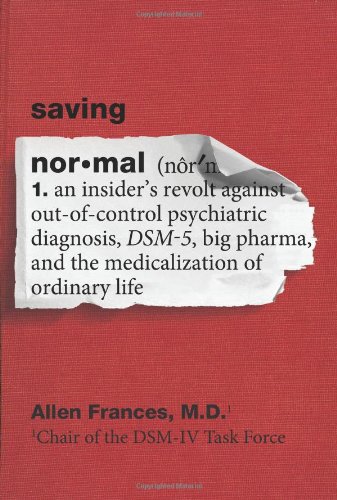
“Ordinary experience is medicalized.” Dr. Allen Frances, a psychiatrist and Chair of the DSM4 task force, rails against the psychiatric profession for labeling people with diseases they don’t have. If you are grieving two weeks after the death of a spouse, you have depressive disorder; if your child is inquisitive and energetic, he has attention deficit disorder. Of course, watchful waiting is never the solution, but fortunately, there is a new and expensive medication for this disease.

“Language corrupts thought.” A diagnosis of “carcinoma-in-situ” brings up scary connotations and fuels the desire for aggressive treatment. However, our technologies have gotten so advanced that we are detecting many early cancers that, if left alone, may never grow or harm the patient. The National Cancer Institute recently proposed a change in terminology for cancer, and other conference speakers proposed other disease definitions that should be changed.

“We are practicing faith-based medicine that ignores the harms and exaggerates the benefits.” It is well-documented that medical journals bias in favor of positive results, and that there are many financial interests to promote the newest, latest medication or treatment. Stories abound about people who survived because of early detection of disease and new, experimental treatment. However, there are also many stories of people who experience serious side effects and fatalities from overdiagnosis and overtreatment. These counternarratives need to be told, and evidence for harm needs to be published.

“Overdiagnosis is a symptom of the same problem that drives underdiagnosis and misdiagnosis.” In the discussion of overdiagnosis, it’s important not to forget that there are other pressing issues too, including medical error and lack of access to healthcare. The medical industrial complex is at fault here, too, and doctors need to assume our social responsibility and moral imperative to do what’s best for our patients.

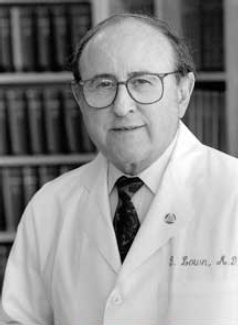
“More care isn’t better care; it’s just more care.” In the words of my hero, cardiologist and Nobel Peace Prize winner Dr. Bernard Lown: “Overtreatment harms patients, thereby negating the first principle of doctoring, primum non nocere.” Our goal in medicine should be to do “as much as possible for the patient, as little as possible to the patient.”

There will be many challenges ahead for conference attendees, including the difficulty of framing and discussing the problems of overdiagnosis and overtreatment. Much of this conversation will continue at the Lown Institute's Right Care Alliance conference in December. My next few blog articles will address these difficulties. Stay tuned, and please feel free to contribute your thoughts below!
My last blog post discussed why medicine is so intolerant of uncertainty and inaction, and how this has resulted in a culture of overtesting and overtreatment.

All of us as patients and doctors are at fault for feeding into this system of waste and harm. However, there are some active voices of resistance. Here are some examples:

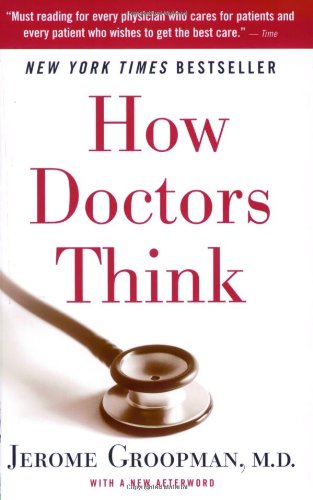
Dr. Jerome Groopman, internist and author of the excellent book, How Doctors Think, writes about how he teaches medical students to “don’t just do something—stand there.” Very few situations in medicine require immediate action. It may be uncomfortable to apply the tincture of time as a treatment, and many doctors find it easier to order a test than to discuss the pros and cons of the test with a patient.

However, we need to remember our first principle, primum non nocere: first do no harm. Dr. Abraham Verghese writes about the importance of restraint and self-awareness in his novel, Cutting For Stone. Here is the protagonist, a doctor himself, speaking about his father:

My father, for whose skills as a surgeon I have the deepest respect, says, "The operation with the best outcome is the one you decide not to do." Knowing when not to operate, knowing when I am in over my head, knowing when to call for the assistance of a surgeon of my father's caliber--that kind of talent, that kind of "brilliance," goes unheralded.

Doctors: think carefully. Engage in thoughtful discussion with your patient, and decide together what’s best for him. Remember that no testing and no treatment may be the best course of action.

If you have to do something, consider a novel treatment that Dr. Aaron Stupple coins “a listening infusion.” During his internship, Dr. Stupple faced resistance when he questioned his supervisors on the necessity of costly tests and invasive treatments. As the most junior person on the team, he couldn’t override their decisions, but he could add his own treatment. He made it a routine to visit patients and talk to them, often staying hours after everyone else to finish his “listening infusion”. He didn’t obtain more test results, but somehow he knew more about his patients than anyone else. He didn’t give them a pill, but somehow his patients felt better at the end of the day.

This is what doctoring should be about. A recent study of resident doctors found that only 12% of their time was spent interacting with patients, versus 40% interacting with the computer. The doctor may find everything about a person’s laboratory tests, but nothing about her family or values. “Personalized medicine” and “patient-centered care” are hot buzzwords, but it’s not just about finding someone’s DNA and redoing the waiting room area. Improving medical care must begin with personalizing care to the patient and listening to her story.

We must bring back the art of medicine and the art of healing, and treat all of our patients with a “listening infusion”. Then, “don’t just do something—stand there”! Changing any deeply-entrenched culture is hard, but it can happen: one doctor at a time, one patient at a time.

It was the beginning of my third year of medical school. I had just started my first clinical rotation. My very first patient was Ray, a middle-aged man with pancreatitis.

I presented his case to the team. “What are Ranson’s criteria?” the attending physician asked.

My mind went blank. “Uh, I’m not sure,” I said.

“Next time, you’d better be sure,” the attending said. He turned to my colleague, who promptly gave the correct answer.

On that first day of medical training, I learned that “I don’t know” is not an acceptable answer. If you don’t know, look it up. Make it up you have to. Whatever you do, never admit that you don’t know.

Not surprisingly, doctors end up not tolerating uncertainty. In our high-tech era, this means more is done. A patient has seemingly vague symptoms, so the doctor orders some laboratory tests “just to get a baseline”. A doctor doesn’t know what’s causing the headache, so she orders a CT or MRI “just to see”. Medical students are rewarded for pursuing obscure diagnoses, so they order increasingly esoteric tests “just in case”.

This insidious practice has resulted in a culture of overtesting and overtreatment. Studies show that 30% of all medical care—at the tune of $700 million per year—is waste. Not only does this impose a heavy financial burden on society and on patients, it also results in avoidable harm. Every test has risks and potential side effects. A CT scan has a risk of radiation, for example, that may lead to cancer later in life. And one test often leads to another, even riskier, test.

Recently, my husband had an itchy rash on his arms. He mentioned this to a dermatologist friend, who recommended that he come into the office for a skin biopsy. I asked how the biopsy would change my husband’s management: regardless of what it showed, wouldn't he still use a steroid cream? Sure, the dermatologist said, but at least we’d have more information.

Nothing against our well-intentioned friend, but this is a case where more information isn’t better. Why get a biopsy—an invasive procedure with risks including bleeding and infection—when it wouldn’t change the management or the outcome? Yet, tests are done all the time to quench the insatiable curiosity inherent in medicine: we just have to know.

Here’s another common scenario. A young woman comes in with abdominal pain. She’s able to eat and drink and looks well, but has a pain in her belly that’s bothering her. Many doctors would order a CT scan of her abdomen to make sure there’s not something bad going on. But what is this bad thing—how likely is it? How does the patient feel about the risks of the test, versus the risks of watchful waiting? If she’s fine waiting, then why expose this young person to unnecessary radiation, when it would be just as reasonable to wait to see if she gets better the next day?

More tests and better technologies are not the solution to improving clinical care. In fact, we know that 80% of diagnoses can be made without any tests at all, but by carefully listening to the patient’s story. I’m an emergency physician, yet even in the emergency setting, it is rare that a patient requires one particular test, and that test must be done right now.

Here’s what to do instead. Doctors: talk to your patients. If you’re not sure, tell them. Patients prefer honesty to false reassurance. Instead of reflexively ordering a test, discuss the benefit of the tincture of time. Remember that our first principle is to “Do no harm”. I just met two doctors, Tanner Caverly and Brandon Combs, who started an educational initiative to encourage doctors-in-training to write vignettes of medical overuse. To them, and to a growing number of physicians including the Lown Institute’s Right Care Alliance (of which I'm a proud member), preventing overuse is an ethical imperative.

Patients: insist on being an equal and active partner in your care. Ask “why” and “how”. Why is this test ordered? How will this test change my management? Make sure you know your diagnosis. Assure your doctor that it’s OK if she is not 100% sure; you don’t demand certainty, but you do expect transparency.

It’s taken me nearly ten years to unlearn the bravado I acquired in medical training and to learn that uncertainty isn’t bad; more isn’t always better; and less can be more. As the great cardiologist and humanist Dr. Bernard Lown says, you should always feel better after having gone to your doctor. We need to focus on healing by teaching and practicing the art of listening, compassion, and kindness.

Everyone knows that life in the E.R. is fast-faced, extremely busy, and ever-challenging. When things get crazy, it becomes habit for busy physicians to see patients as “the chest pain in room 6” or “the broken wrist in the hallway.” We turn people with their amazing lives and fascinating stories into a nameless number and a “chief complaint”.

It’s a practice that’s easy to justify—after all, taking a long time with one patient can delay care for all the other people who are waiting to see us. However, the story of the patient, the story of why he is there, and the context of his illness—these are all critical to us taking care of him.

Learning our patients’ stories also makes our professional life that much more fulfilling. Last moth, I was supervising an intern, who saw a patient that she was confident she knew what to do with. “Room 8 is an old guy from a nursing home with dementia, who was recently here for pneumonia. He comes in with altered mental status and a cough. He is confused, has a fever, his lungs sound junky. I’m going to get a chest x-ray and do an infectious workup. He probably has pneumonia, and will need to be admitted.”

That sounded like a straightforward plan to me. It was a busy day, and I went into see this “old guy” who probably had pneumonia. I introduced ourselves to a woman in his room, his daughter, who was holding a book. It was on love: the metaphysical interpretation of love.

She saw me looking at the book. “Have you ever read it?”

I shook my head. “Well, it’s my father’s book,” she said. “It’s been printed in 100 countries.”

Indeed, this “old guy from a nursing home” was one of the foremost experts on the philosophy of love. He had had a phenomenal career, filled with interesting adventures. The daughter was one of many people who made up his loving family—they were more than happy to tell me about him. In a few minutes, I had learned so much more about him as a person, and as a patient.

How often do doctors find out, really find out, about our patients? Well, here’s how NOT to find out. Ask: “Do you have chest pain? Shortness of breath? Abdominal pain?” These yes/no questions may seem important to us as we check off a list that doctors feel compelled to ask, but they don’t tell us anything about who is the person in front of us. We have no idea of the careers they devoted effort to, accomplishments that they are proud of, and goals that they strove for.

As I think back to the most memorable moments of my medical training, what stands out aren’t the never-ending lectures, or heroic surgeries, or terrible traumas. What I remember are the people I met and their stories.

I remember Sharon, a lady who was dying of cancer. Her husband showed me a picture of the two of them when they were both three—they had met in a sandbox 80 years ago, and had been inseparable since then. I remember Fan, a middle-aged man who was so serene after a serious car accident that resulted in tetraplegia. I later found out that he was a Buddhist monk, one of the most revered in Asia. I remember Sydney, a drug addict I saw as an intern who returned two years later saying that he was now totally clean and running a recovery program for teens. These are the stories I cherish, of the patients I have been privileged to care for.

Physicians, nurses, and our team of health professionals are part of a humbling profession, an incredibly rewarding one, where we are honored to meet people from all walks of life. Instead of shying away from this task and turning people into a compilation of their symptoms, we need to embrace the gift that our patients are giving us. We should ask our patients about themselves. Not just what pain they have, or do they have this symptom or that symptom, but ask them who they are. What they do. What drives them. What makes them happy. Not only will it add so much depth and accuracy to their diagnosis and their care, knowing our patients will make doctors happier people—individuals who are more attuned to the humanity of our patients, and ourselves.

This column is modified from an article published in the American Academy of Emergency Medicine’s magazine, “Common Sense”. I explore these ideas and more in my new book, When Doctors Don’t Listen: How to Avoid Misdiagnoses and Unnecessary Tests.
Recently, I had the honor of meeting Catherine, a mother, caregiver, and patient advocate. Seven years ago, Catherine became pregnant with twins. In week 29, she was told that Twin B had died. Twin A was born two months later.

She was named Alexis (her twin, whose footprints her parents will always cherish, was Kaitlyn). Weighing just 4 pounds at birth, she was in the neonatal intensive care unit for months. Catherine and her husband were told numerous times that Alexis was going to die, but despite her long list of medical problems, “the list was overshadowed by her will to live.”

At just one year old, Alexis was diagnosed with no less than 15 serious medical conditions. Her medical records were taller than her, and the list was growing. Thankfully, Alexis was growing, too, into a remarkable young girl.  In fact, says Catherine, that was her biggest problem with Alexis’s medical care for so long. “I wish more doctors acknowledged the bright side.”

Catherine’s stories of how her doctors perceived and interacted with her child are sobering. At one point, a doctor walked into her room and told her family that Alexis had just one month to live and that it was time to get the rest of the family—then just walked out.

As a mother of a sick child, she has four lessons for healthcare professionals. I have copied them verbatim from her blog entry, because her voice is so poignant and so important: 

1) “Always acknowledge, appreciate and respect the family.”

2) “Please understand why we are so anxious to know a diagnosis. We appreciate your desire to be thorough and “solve” our child’s problem, but that solution is often just the beginning for us. We’re anxious to know how our lives will change and to find ways to balance that change with parenting techniques that will make our children’s lives better.” 

3) “We need to be partners in the care of our kids. You see them for a few hours every year; we keep them alive for the other 8,755 hours.”

3) “We know that part of being a team means getting bad news. However, you have the power to layer those conversations with as much hope and understanding as possible. Please do your best to exercise that power.”

Doctors, nurses, health professionals—take heed. Patients, too—remember that you can demand this standard of care from your healthcare providers. Make sure your doctor listens. Ask for a diagnosis. Assure your doctor that it’s OK if she’s not 100% sure; please share with you what she knows. Partner in your care. Ask your doctor why he is recommending this test or that treatment. Exercise your power to get the care that you and your loved ones deserve.

Alexis is now six. Catherine describes how she watched a pediatrician burst into tears as she watched Alexis walk hand-in-hand with her dad. 

“That afternoon,” she writes, “We all saw Alexis as not a collection of problems but as a bundle of hope. We knew that six years after her birth, ‘A’ didn’t stand for Alexis, it stood for Awesome.”

Thanks to Thriving, Boston Children’s Hospital pediatric health blog, for allowing parts of Catherine’s original blog to be published. Have other stories to share that may help other patients, caregivers, and health professionals? I welcome your comments.
May is a recent divorcee in her early sixties. She was working out at the gym when she began to feel queasy and lightheaded. She awoke in the back of an ambulance, and soon, she was in an E.R. getting blood drawn. “We need to make sure you don’t have a heart attack,” she was told.

As the day went on, May underwent test after test to “rule out” a heart attack, then a blood clot in her lungs, then a stroke. She was relieved when she found out that she didn’t have these grim problems, but she still had no idea why she felt terrible. By the next morning, she had developed a fever and was shaking with chills. It took until the end of the following day for doctors to figure out that the problem was a raging gallbladder infection. She had to undergo emergency surgery, where they found that her gallbladder had ruptured and was leaking infected fluid throughout her abdomen.

When you go to the doctor, you want to find out what’s wrong and how you can get better. In modern day America, though, what you will get are tests to “rule out” problems rather than figure out what you actually have. Patients go through x-rays and CT scans, get vials of blood drawn, and stay in hospital for days on end, then leave with a huge bill but little idea of why they feel sick or how they can get better. Not only does it leave them confused and feeling just as unwell, it often results in misdiagnosis because, as in May’s case, the focus was never on figuring out the problem to begin with.

Like the rest of America, our healthcare system has become morbidly obese. Costs are skyrocketing; we spend 18 cents of every dollar on health, a number that will rise to over a quarter by 2020. Millions of people are priced out of healthcare, with one in eight uninsured and far more underinsured. But our system is not just failing those who lack access to care. Those who have access are getting exposed to unnecessary tests with unnecessary side effects. People are going to their doctor and leaving without feeling any better.

In fact, they are getting misdiagnosed, and are suffering the consequences. Over 100,000 deaths due to medical error occur every year, and the majority of these errors are errors in diagnoses. There are growing movements to make medical care safer. I applaud these efforts to ensure surgical safety and reduce bloodstream infections, but the push for safety has to begin even earlier in the process, with getting to the right diagnosis.

Why is the diagnosis so important? First, it’s important for you to know what you have before you can treat it. You have to know what disease or process you have so you know what to expect, what to watch out for, and what you can do about it. Throwing medications at symptoms just masks them, but doesn’t get at the root of the problem. Second, not knowing what diagnoses are being considered is equivalent to searching for a needle in the haystack: it’s aimless and dangerous. Tests should be done to narrow down diagnoses, or else results are going to be obtained that don’t make sense, and you still won’t know what you have or what to do about it.

It took May a near-death experience and over a year of recovery to find out that the key to better to better healthcare hinges on getting the right diagnosis. In her case, all of the symptoms of a gallbladder infection had been there from the start. The problem was that the doctor was fixated on making sure she didn’t have other things—other problems that she didn’t even have symptoms for—and missed the boat altogether.

When you are next at your doctor, make sure you ask for your diagnosis. If the doctor is not sure, or wants to run some tests first before telling you, ask her for a list of possible diagnoses and the most likely diagnosis BEFORE you consent to the tests. Your doctor must have some thoughts on what you might have, and you should find out what that is (if she doesn’t have any clue, then that’s a problem too!).

Getting to the diagnosis is the first and most critical step to getting better, and you need to help your doctor help you. Only by ensuring that we get the best and most efficient care possible for ourselves and our loved ones can we achieve meaningful healthcare reform for the nation.