• Feed RSS
Showing posts with label listening. Show all posts
I wrote a piece for NPR about the patients we see in an urban ER, and how every day is a reminder that health doesn't exist in a vacuum.
 
Even in the time-limited setting of the ER, it's important for providers to understand where our patients live, work and play. It's these conversations that allow us to diagnose and treat the real causes of our patients' ills.
 
Thanks to everyone for reading, and in particular to the many people who pointed out the critical necessity of teamwork--with nurses, physician assistants, technicians, nurse practictioners, case managers, students, social workers, and many more. 
 
Indeed, it takes an entire team to provide true care. As people have commented on NPR's Facebook site, we in the ER rely on social workers--many of whom are overworked yet try so hard to help our patients. Whenever we as docs and nurses refer patients to social workers, they are always fantastic about helping us. It's critical for us frontline providers who see patients first to ask the tough questions and look beyond the "chief complaint" in order to know to involve the other members of our team.
 
I have been fortunate over the course of my training and career to learn from and work with many incredibly caring, highly compassionate, and superbly competent providers. It's also the community leaders and neighborhood organizations who provide care outside the walls of our institution, who are critical to the health of people. 
 
On this Thanksgiving weekend, I give them, and all of you, my unending gratitude and deep respect. Thank you.

My blog entries have been light over the last month in large part because of significant travel. In between clinical shifts in the ED and co-leading a fantastic cohort of GWU’s Residency Fellowship in Health Policy, I was fortunate to be invited to speak at several conferences in October. Here are some highlights:

In early October, I was honored to keynote the Centra Health Foundation annual gala in Lynchburg, VA to celebrate the work of several hundred volunteers, all of whom were either breast cancer survivors or family members of survivors. The event was moving and powerful; I thought of how proud my mother would be to hear me share her story with so many courageous and inspiring women.

Next was the 12th Annual UC Davis Pre-Health Professions Conference in Davis, CA. Ten years ago, when I was the national president of the American Medical Student Association, I was approached by a student from a community college named Joubin Afshar who told me that he had started a conference for community college students who wanted information about the health professions. I attended the conference then, and was blown away by the drive and passion of these students. Nearly all were first generation college students, and for many, this was their first and only exposure to medical professionals.

Having been such a student myself, I vowed to return whenever possible. Last year and this year, I gave a keynote and led four workshops on leadership in medicine. Nearly 8,000 students attended the conference—many took overnight buses across California and even from the East Coast. It’s remarkable to see the work done by a small group of committed students. I wonder how many health professionals are where they are now because of the work of Joubin and his colleagues. (I also had the opportunity to see a friend and colleague, Dr. Davis Liu: an exceptional leader, thinker, and physician.)

My former Rhodes colleague who is now Chief Resident at Einstein Hospital in Philadelphia, Dr. Gary Huang, invited me to give Grand Rounds to the Departments of Internal Medicine and Emergency Medicine (pictured here with fellow Chief Resident and very kind physician Dr. Carlos Davila). I received many questions on what physician trainees can do to avoid burnout and deliver true patient-centered care. 

No answer I gave could have been as telling as the actions of Dr. Huang. As we were coming down the elevator, a woman in her fifties stopped us to ask directions to a particular surgeon’s office. I watched as Gary helped her figure out the name of the surgeon, led her to identify his location, then navigate her there. So many other people would have simply said, “I don’t know” and implied that it’s not their job to know, but not Gary. He took the time to help this woman in need, going far out of his way to do so. He didn’t do it to impress her or me (and I suspect he and his equally humble and caring wife Sherry would both be embarrassed by this blog post), but because it was the right thing to do. This action speaks volumes about the type of doctor he is, and answers the question that the residents asked: there may be many factors that make us disconnected from our patients, but it is within our abilities to treat patients as people, to value each person’s humanity, and to exemplify basic dignity and respect.

At the Urgent Matters Conference during the American College of Emergency Physicians meeting in Chicago, Dr. Jesse Pines expanded upon these themes. The other presenters (including my former attending at Brigham and now MGH Vice Chair, Dr. Ali Raja) and I spoke about how patient-centeredness and better communication can reduce overtreatment, improve patient safety, and transform care. The response was much better than expected, in no little part due to the amazing tweeting capabilities of one Dr. Seth Trueger (aka @MDAware).

Then it was on to Nijmegen, the Netherlands, where Corine Jansen (pictured), Jennie Grau, and their team organized the first-ever listening conference in healthcare. Initially, when my husband heard that I was speaking at listening conference, he laughed—isn’t it an oxymoron? And I have to say that I didn’t initially understand what a listening conference was really about (though the International Listening Association has a long history of hosting these conferences, and cosponsored this one).

The moment I showed up, though, I got it. Patients, family members, doctors, nurses—they shared their stories. They were powerful and unforgettable; indeed, as one participant commented, “the shortest distance between people is a story.” I heard a doctor speak about how he and his fellow neurologists assumed that their patients with Parkinson’s disease cared most about memory and managing their tremors. But when they listened—really listened—to their patients, they heard that what mattered most to them was sleep and sex. So they changed the entire medical encounter so that it wasn’t just about medication management, but also hired a sex and sleep therapist. Corine, Jennie, your team at REShape (where I took the photo with the best message ever): hats off to you for a fantastic conference and to the tremendous individuals I had the pleasure of meeting there.

This week, it is off to Grantmakers in Health Conference in DC then American Cancer Society in San Jose, CA. I hope to contribute more substantive blog posts soon; please write if there are particular topics you would like to see.

Using checklists in medical care sounds like common sense. We’ve all heard the stories of the man who had the wrong leg operated on, and the woman who had a sponge left in her belly. Checklists are routine in other professions to standardize management, and we know they can prevent hospital infections and surgical error.

But can there be a downside to checklist medical care? Consider these two examples:

Scenario 1
You come into the ER after you dove to catch a softball. You’re pretty sure you have a bruised rib, but because you said the magic words of “chest pain”, you get whisked away to get blood drawn and then to get an EKG and a chest x-ray. You’re told this is all part of the “chest pain protocol”. But did you really need all of these tests done?

Scenario 2
You tell your doctor you’re tired and feeling run down. Your doctor does “routine blood work”, again following a checklist of things to look through: anemia, thyroid problems, and so forth. Everything is “normal”. The checklist is complete, so your doctor assures you that you’re OK—even though you know you’re not.

In my work as an emergency physician, I know that checklists can be helpful. They ensure complex procedures are done thoroughly and provide an extra assurance for safety. However, before undergoing the procedure or any treatment, you must first have a diagnosis. This diagnosis, and the subsequent treatment, needs to be personalized to you. A “cookbook” approach where you get the same recipe of tests and medications as anyone else will result in expensive, unnecessary care, and even misdiagnoses and harm.


Here are five tips to make sure you get the best, personalized care for you:

#1. Insist on telling your story. Studies have shown that 80% of all diagnoses can be made based just based on the story of your illness. Doctors have limited time to listen to your story, so you must make sure your doctor understands why you’re there. Don’t just say that you have “chest pain”; explain when it started, what you were doing, and how it felt. Write down key elements. Practice until you can tell it in 30 seconds or less. Then tell it to your doctor the moment you see her to make sure the doctor focuses on your individualized story.

#2. Give open-ended responses to close-ended questions. If you suspect that the doctor is going through a checklist of yes/no questions, try to get her to focus on you by adding personal elements to your answers. If you’re asked, “when did you start feeling so tired?”, don’t just say “two weeks ago.” Add that you’re normally very energetic and run 5 miles a day, but for the last two weeks, you can barely get out of bed to work. These answers help provide context to who you are.

#3. Ask about your diagnosis before you consent to tests. If you’re told you need to get blood drawn, ask why. Sometimes, that’s enough to stop the “cookbook” from taking over. Every test should be done for a specific reason, not just because it’s what’s done in this protocol, but because it helps focus the diagnosis. Also ask about what to do if the tests are negative. Just because they’re negative doesn't mean there isn’t anything wrong, so what should be next steps?

#4. Inquire about treatment options. In very few situations is there only one test that could work or one protocol that must be followed. If your doctor says you need to do this one set of tests, ask what your other options are. Often, watchful waiting is a perfectly acceptable alternative. Discussing options helps to remind your doctor to tailor the treatment to you.

#5. Let your doctor know that you want to be a partner in your decision-making. If you still think that your doctor is following a recipe rather than individualizing care, ask her to explain her thought process to you. Say that you respect her expertise, and you want to learn what it is that she is thinking. Your doctor may be so busy or so used to checklists that your request can help her to refocus on you and your individual needs.

This article was previously published in Women's Health Magazine (posted here with their permission).

My patient, a 40-year old woman named Sally, broke into a wide grin when she saw me enter the room. 

"Are you my doctor?" she asked. I nodded and started to introduce myself, but she cut me off. "I'm so glad that I have a woman doctor! I think women are much better than men."

That's in stark contrast to the previous patient I had seen just before Sally. Frank, a 72-year old man, looked at me askance and asked me if I was sure I wasn't his nurse. His wife explained (nicely) that they preferred a male doctor. 

These preferences don't always abide by gender or age divisions, either; plenty of female patients have said they prefer male doctors, and vice versa.

A new study from the University of Montreal finds that there may be real differences between the care provided between female and male doctors. Female doctors are more likely to follow evidence-based guidelines, and they score higher on care and quality, according to the study. Other research has found that female doctors tend to show greater empathy and are perceived as being better listeners. 

Some researchers have hypothesized that the differences are cultural and rooted in our upbringing. From an early age, girls tend to serve as confidantes to their friends, which may then result in greater attention to listening in the clinical context.

At the same time, I have worked with many men who display great empathy and care deeply about their patients. I also know of female doctors who don't hold up to the traditional gender stereotypes and don't like to spend time listening. 

In selecting a doctor, gender is one component. For some people (like Sally and Frank), it may matter a lot, in which case it should certainly help guide your choice of doctor. Other people just want to find someone who they can trust; they aren't as concerned whether their doctor is male or female.

So how can you identify a good doctor? Here are some characteristics to look for—regardless of gender:

Your doctor should listen to you: Research shows that 80 percent of diagnoses can be made just by listening to your story. Listening leads to better care, and your doctor should make an effort to hear you out and learn about you.

Your doctor should view your relationship as a partnership: Today's medical care is not about the doctor telling you what to do; rather, your doctor should involve you in your care as an equal partner. He or she should actively involve you in every step of the decision-making process about your treatment. 

Your doctor should be willing to ask for help: There is so much information on diagnostics and treatments—one person cannot possibly know everything. A good doctor is one who isn't afraid to admit that he or she doesn't know everything. Asking for help doesn't mean your doctor is incompetent; rather, it should increase your faith in his or her abilities and humility.

Your doctor needs to be available: It's unrealistic to expect that your doctor will be at your beck and call 24/7; however, before you leave your doctor's office, he or she should communicate to you how you can get help if necessary. Make sure you understand your follow-up plan. Are there any specific signs or symptoms you should watch out for? What should you do if something new or worse happens? 

You should feel comfortable with your doctor: This is perhaps the most important of all. If you do not feel at ease with your doctor, you might not share critical information, and important pieces of the puzzle might be missed. That's the most compelling argument for choosing a doctor of a particular gender—and only you can decide whether that's a characteristic that matters a lot to you.

One of my heroes, the Nobel prize-winner, humanist, and cardiologist Dr. Bernard Lown, talks about how a doctor is someone who should always make you feel better after having seen them. You go to your doctor because you want to feel better. You should find someone—female or male—who helps you accomplish this goal.


This article was previously published in Women's Health Magazine (posted here with their permission).

One year ago today, my book, When Doctors Don’t Listen: How to Avoid Misdiagnoses and Unnecessary Tests, was published. My goal in this last year has been to travel around the country and talk about the book and its message of advocating to improve your health. I planned a 48-city itinerary where I’d crisscross the U.S. from Massachusetts to California and back. I’d speak at bookstores, libraries, nursing homes, universities, and community centers.

What I didn’t anticipate was that this “speaking tour” would turn into a “listening tour”. 

From Boston to Los Angeles to Lexington to Cincinnati, people told me about their experiences with healthcare. Some, like 62-year old Annie from San Francisco, thought of themselves to be “e-patients”, or empowered patients. “I have a rare rheumatological illness that very few doctors have encountered,” she told me. “I bring research articles and educate my doctors.”

Others avoid doctors, like Janet, a 48-year woman from St. Louis who believes in “prevention, prevention, and prevention.” However, like many others I met, she sees healthcare providers nearly every week because she’s a caregiver to her elderly parents and her three children.

Over 2,000 people shared with me their frustrations with doctors, insurance companies, hospitals, and the healthcare system. I listened and learned.

Here are 10 themes that emerged: 

People don’t know that they have options, especially when it comes to saying no. They are used to doctors telling them what they need; they are surprised when I mentioned that patients always have a choice to NOT get a test or NOT take medications. Few interventions are so emergent that patients need to obtain them immediately. Watching and waiting, discussing it further with the doctor, and obtaining a second opinion are reasonable alternative. 

People want to please their doctors. In general, people like their doctors. Many feel they have to do what the doctor wants out of fear of displeasing them. “I lie and say I take medications I can’t afford,” 75-year Tony from San Antonio said. Others expressed their need for doctors to support their decisions. “Give me real choices and mean it,” says 38-year old Teresa. “Don’t judge me as being noncompliant just because I have a different value system.” 

People don’t want more care—they want right care. People recognize the harms of overtesting and overtreatment, and know that more care isn’t always better. They know to be wary of industries with ulterior motives. “Drug companies and insurance companies aren’t operating out of the goodness of their hearts,” says Joseph, a 55-year from Providence. “There’s a lot of money to be made money from healthcare.” They also fear rationing, and caution that less isn’t more either. What they want is the right care, without personal or commercial interests getting in the way. 

People don’t expect perfection, but they demand transparency. They know that doctors aren’t omniscient; they just want them to share what they know. Uncertainty is fine, as long as they are told the truth. Also, people accept that doctors are human and that medical errors occur. They don’t aim for retribution, but they do want disclosure of the mistake and to know that the doctor is committed to addressing it. 

People want more information to choose doctors and hospitals. “It’s disgraceful that I can find all types of information on choosing a coffee shop but I know next to nothing about my doctor,” 35-year old Jenny from Cincinnati says. People want to know about their doctors, not only their credentials, but also any financial conflicts of interests, their values, and who they are. 

People know that hospitals aren’t hotels. They don’t expect valet parking and 3-course meals, but they do want to be treated with respect. If they’re cold, they want a blanket. If they’re thirsty, they want some water. Without compassion and addressing basic human needs, marble staircases and fancy MRIs are worthless. The same goes for doctors’ offices. Forget the fancy carpeting, but find staff who treat people with humanity and dignity. 

People will wait if they get what they need. The dogma based on patient satisfaction survey results is that higher wait times leads to unhappy patients. However, the people I spoke with are unhappy not because they had to wait, but because they did not get what they expected despite the wait. “I waited two hours, and the doctor just spent five minutes with me,” said 49-year Sophie from Plymouth. Studies show that patients are interrupted in about 12 seconds; it’s no wonder people feel ignored and not listened to! 

People aren’t lazy when it comes to their health, and don’t always want the quick fix. Most people don’t want to go to their doctor at all, and prefer to find ways to improve their lifestyle and prevent disease. The popularity of diet and fitness books is case in point. Many do not want “the easy way out” in the form of drugs or surgery, but would rather discuss fitness, diet, and use of alternative therapies with their doctor. “It’s my doctor who doesn’t want to discuss these therapies with me,” says 22-year old Sandra.


With Dr. Jocelyn Elders and advocate Patty Skolnik
People know that the current system is unsustainable. No matter the politics, people saw the healthcare system as being broken, and all of them as victims—and future change agents. “It’s just like the environment: there are finite resources,” I heard over and over. Since “free” and “cheap” weren’t synonymous with good care, people are willing to pay out of pocket for better value (as long as it doesn’t bankrupt their family). They are willing to share in the cost to society, because they recognize they already are.

People crave connection and caring. They want face-to-face interaction with “their” doctor. They want to be listened to and heard. Knowing their medical history is only the start; they also want their doctors to understand and connect with them emotionally, physically, and spiritually. This requires a sustained relationship; people do not want to go to “minute clinics” or use smartphone apps to access their doctor, but rather long for a long-standing relationship with an accessible, trustworthy provider.

By no means is this list meant to be exhaustive or intended to represent every one of the individuals I met. The very nature of healthcare is that it is personal and individual. These findings represent the thoughts and wishes of a broad spectrum of people across the U.S. They challenge conventional wisdom when it comes to what is needed in healthcare. For example, the rise of urgent-care centers and smartphone apps should be seen as failure, not progress. Similarly, reducing wait times or adding fancy office furniture is not the fix for patient dissatisfaction.

Reform proposals tend to target policy changes that become mired in rhetoric and statistics. What people want is more basic, and more achievable. Doctors need to be transparency and honest with patients. They need to move away sick care towards healthcare. 

In the words of the great humanist and cardiologist Dr. Bernard Lown, we need to “do as much as possible for the patient, as little as possible to the patient.” Medical students need to learn shared decision-making and integrated care. Patients—people—should be part of every healthcare debate. Ultimately, we must restore medicine to being a caring partnership that prioritizes basic human dignity and respect. 

My listening tour continues. Please share your thoughts below. I look forward to listening and learning.
My last blog post discussed why medicine is so intolerant of uncertainty and inaction, and how this has resulted in a culture of overtesting and overtreatment.

All of us as patients and doctors are at fault for feeding into this system of waste and harm. However, there are some active voices of resistance. Here are some examples:

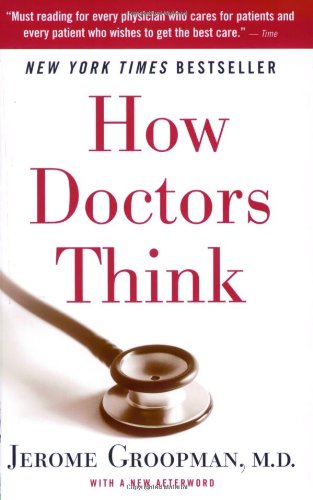
Dr. Jerome Groopman, internist and author of the excellent book, How Doctors Think, writes about how he teaches medical students to “don’t just do something—stand there.” Very few situations in medicine require immediate action. It may be uncomfortable to apply the tincture of time as a treatment, and many doctors find it easier to order a test than to discuss the pros and cons of the test with a patient.

However, we need to remember our first principle, primum non nocere: first do no harm. Dr. Abraham Verghese writes about the importance of restraint and self-awareness in his novel, Cutting For Stone. Here is the protagonist, a doctor himself, speaking about his father:

My father, for whose skills as a surgeon I have the deepest respect, says, "The operation with the best outcome is the one you decide not to do." Knowing when not to operate, knowing when I am in over my head, knowing when to call for the assistance of a surgeon of my father's caliber--that kind of talent, that kind of "brilliance," goes unheralded.

Doctors: think carefully. Engage in thoughtful discussion with your patient, and decide together what’s best for him. Remember that no testing and no treatment may be the best course of action.

If you have to do something, consider a novel treatment that Dr. Aaron Stupple coins “a listening infusion.” During his internship, Dr. Stupple faced resistance when he questioned his supervisors on the necessity of costly tests and invasive treatments. As the most junior person on the team, he couldn’t override their decisions, but he could add his own treatment. He made it a routine to visit patients and talk to them, often staying hours after everyone else to finish his “listening infusion”. He didn’t obtain more test results, but somehow he knew more about his patients than anyone else. He didn’t give them a pill, but somehow his patients felt better at the end of the day.

This is what doctoring should be about. A recent study of resident doctors found that only 12% of their time was spent interacting with patients, versus 40% interacting with the computer. The doctor may find everything about a person’s laboratory tests, but nothing about her family or values. “Personalized medicine” and “patient-centered care” are hot buzzwords, but it’s not just about finding someone’s DNA and redoing the waiting room area. Improving medical care must begin with personalizing care to the patient and listening to her story.

We must bring back the art of medicine and the art of healing, and treat all of our patients with a “listening infusion”. Then, “don’t just do something—stand there”! Changing any deeply-entrenched culture is hard, but it can happen: one doctor at a time, one patient at a time.

It was the beginning of my third year of medical school. I had just started my first clinical rotation. My very first patient was Ray, a middle-aged man with pancreatitis.

I presented his case to the team. “What are Ranson’s criteria?” the attending physician asked.

My mind went blank. “Uh, I’m not sure,” I said.

“Next time, you’d better be sure,” the attending said. He turned to my colleague, who promptly gave the correct answer.

On that first day of medical training, I learned that “I don’t know” is not an acceptable answer. If you don’t know, look it up. Make it up you have to. Whatever you do, never admit that you don’t know.

Not surprisingly, doctors end up not tolerating uncertainty. In our high-tech era, this means more is done. A patient has seemingly vague symptoms, so the doctor orders some laboratory tests “just to get a baseline”. A doctor doesn’t know what’s causing the headache, so she orders a CT or MRI “just to see”. Medical students are rewarded for pursuing obscure diagnoses, so they order increasingly esoteric tests “just in case”.

This insidious practice has resulted in a culture of overtesting and overtreatment. Studies show that 30% of all medical care—at the tune of $700 million per year—is waste. Not only does this impose a heavy financial burden on society and on patients, it also results in avoidable harm. Every test has risks and potential side effects. A CT scan has a risk of radiation, for example, that may lead to cancer later in life. And one test often leads to another, even riskier, test.

Recently, my husband had an itchy rash on his arms. He mentioned this to a dermatologist friend, who recommended that he come into the office for a skin biopsy. I asked how the biopsy would change my husband’s management: regardless of what it showed, wouldn't he still use a steroid cream? Sure, the dermatologist said, but at least we’d have more information.

Nothing against our well-intentioned friend, but this is a case where more information isn’t better. Why get a biopsy—an invasive procedure with risks including bleeding and infection—when it wouldn’t change the management or the outcome? Yet, tests are done all the time to quench the insatiable curiosity inherent in medicine: we just have to know.

Here’s another common scenario. A young woman comes in with abdominal pain. She’s able to eat and drink and looks well, but has a pain in her belly that’s bothering her. Many doctors would order a CT scan of her abdomen to make sure there’s not something bad going on. But what is this bad thing—how likely is it? How does the patient feel about the risks of the test, versus the risks of watchful waiting? If she’s fine waiting, then why expose this young person to unnecessary radiation, when it would be just as reasonable to wait to see if she gets better the next day?

More tests and better technologies are not the solution to improving clinical care. In fact, we know that 80% of diagnoses can be made without any tests at all, but by carefully listening to the patient’s story. I’m an emergency physician, yet even in the emergency setting, it is rare that a patient requires one particular test, and that test must be done right now.

Here’s what to do instead. Doctors: talk to your patients. If you’re not sure, tell them. Patients prefer honesty to false reassurance. Instead of reflexively ordering a test, discuss the benefit of the tincture of time. Remember that our first principle is to “Do no harm”. I just met two doctors, Tanner Caverly and Brandon Combs, who started an educational initiative to encourage doctors-in-training to write vignettes of medical overuse. To them, and to a growing number of physicians including the Lown Institute’s Right Care Alliance (of which I'm a proud member), preventing overuse is an ethical imperative.

Patients: insist on being an equal and active partner in your care. Ask “why” and “how”. Why is this test ordered? How will this test change my management? Make sure you know your diagnosis. Assure your doctor that it’s OK if she is not 100% sure; you don’t demand certainty, but you do expect transparency.

It’s taken me nearly ten years to unlearn the bravado I acquired in medical training and to learn that uncertainty isn’t bad; more isn’t always better; and less can be more. As the great cardiologist and humanist Dr. Bernard Lown says, you should always feel better after having gone to your doctor. We need to focus on healing by teaching and practicing the art of listening, compassion, and kindness.

Steve is a 52-year old father of four. Soon after losing his job as a carpenter, he begins to have sharp stomach pains. His primary doctor examines him for a few minutes and then sends him to specialists: a GI doctor, who performs an endoscopy, and a cardiologist, who performs a cardiac catheterization. Both tests are normal, but he develops an aneurysm and a bad pneumonia, and has to spend the next week in the hospital. His medical bill is over $75,000, and Steve has to declare bankruptcy—all because of tests he never needed to begin with.

**

Sandy is a 46-year old grade school teacher who has been feeling unwell for a couple of months: she’s short of breath, feels tired all the time, and has a cough that wouldn’t go away. She goes to her doctor, who tells her it’s just a cold. Her symptoms get worse to the point she can longer go to work, and her doctor diagnoses her with depression and prescribes her some Prozac. That doesn’t help, so her doctor prescribes her Valium for her “anxiety”. It’s not until nearly a year later that she is finally diagnosed with breast cancer—cancer that, by then, has spread to her livers, her lungs, and her brain.

**

Science has brought about many importance advances, but also contributed to costly, harmful, and dehumanized medical care. Of the $2.7 trillion our country spends on healthcare every year, 30%--over $700 million—is wasted on unnecessary tests and treatments. Two out of every three families who declare bankruptcy do so because of excessive medical bills. Overtreatment isn’t just expensive, but it’s bad care. As Steve experienced, every intervention—even a simple blood test—has potential side effects. This doesn’t mean to never get tests, but rather to be certain that the test or treatment is needed.

At the same time medical costs are ballooning, healthcare has become more fragmented and less coordinated. The idea of having “your” doctor is becoming a relic of the past, and patients are shuttled to more and more specialists who have their own incentives. And medical care isn’t becoming safer: according to the Institute of Medicine, 100,000 people die every year because of medical error. The number one cause of medical error is misdiagnosis, which is evident in Sandy’s case: if the diagnosis is wrong, then the tests and the treatment will be wrong as well.
 
Politicians and administrators have proposed many solutions to these current system ailments. They are all based on the premise that more has to be done. More checklists. More tracking. More accountability. More technology. While some of these efforts may be beneficial, there is a far simpler and more fundamental reform that is needed: for patients to tell their story, and for doctors to listen.

The story is a core element of all human cultures. We all know what makes a good story: it is personal; it engages emotion; it has meaning; it grabs your attention from the start. Understanding each other’s stories is the basis for establishing connection, relationship, and trust. In medicine, the story is key to sound medical care. Studies have shown that 80% of diagnoses can be made just based on the story alone. That’s better than any test or combination of tests!

Listening to your story is also a critical aspect of healing. If your doctor didn’t listen to you, how can you be sure that he understood what you have, much less how you can develop a trusting partnership? Yet, doctors are listening less and less. A 1984 study found that patients are interrupted after just 18 seconds. A more recent study found that patients now have just 10-12 seconds to speak.

Over the last year, I have traveled to 48 cities across the U.S. to talk to people about their healthcare. Nearly everyone had a story of how not listening led to a bad outcome. That’s how I met Steve. Like many others, Steve considers himself to be lucky to be alive, but is he so lucky? He feels no better after having gone to his doctors, and now has lost his savings and his home. He suffered complications from tests he never needed in the first place, and he has no trust that doctors will do the right thing for him and his family the next time.

As for Sandy, I know her well too. You see, Sandy was my mother. I was a medical student when she called me to tell me about her symptoms and how her doctor wasn’t listening. I knew that something was wrong. My mother was an immigrant who worked hard all her life, who never complained about anything. Yet, I didn’t know how to help her communicate with her doctor so that he would really understand the gravity of her situation.

It took me a decade—first as a caregiver to my mother, and then as a practicing physician and patient advocate—to figure out that the story is absolutely fundamental to medical practice. Indeed, it can save your life.

Imagine, how different would it have been if Steve started out his story to his doctor by talking about his financial concern and his recent unemployment, how it was making him anxious and have stomach pains. How different would it have been for my mother to say that she’d never sought medical care for anything, but now she was feeling so poorly she could barely get out of bed any more.

And how different would it have been if their doctors listened. Some argue that doctors don’t have time to do so. While doctors are under more time pressure than ever before, it doesn’t take any longer to listen—in fact, it saves the time that’s wasted instead on asking endless close-ended questions and ordering unnecessary tests. Others insist that these tests have to be done because of fear of malpractice. Yet, the number one cause of malpractice is lack of communication, and patients should not have to pay the price for doctors’ fear.

I wish I learned this critical lesson a decade earlier. Not a day goes by that I don’t think about how things could have been different if my mother and I knew what I know now. As a physician and medical educator, I teach my patients and my students that what will really change medicine isn’t the latest IPhone app or newest genetic test, but rather a return to medicine as a healing art.

This requires action by both patients and doctors. Patients, tell your story. Know what goes into a compelling story. Practice it before going to your doctor, then make sure your doctor hears it. Doctors, know that you have to listen. Not just type on your computer and nod your head, but really listen.

Ultimately, transforming healthcare doesn’t require more politics or more technology. Rather, it requires refocusing on the most basic part of ourselves—our story and our human connection. This revolution, the low-tech revolution, is the real solution to healthcare reform.