• Feed RSS
Showing posts with label patient centered-care. Show all posts

My blog entries have been light over the last month in large part because of significant travel. In between clinical shifts in the ED and co-leading a fantastic cohort of GWU’s Residency Fellowship in Health Policy, I was fortunate to be invited to speak at several conferences in October. Here are some highlights:

In early October, I was honored to keynote the Centra Health Foundation annual gala in Lynchburg, VA to celebrate the work of several hundred volunteers, all of whom were either breast cancer survivors or family members of survivors. The event was moving and powerful; I thought of how proud my mother would be to hear me share her story with so many courageous and inspiring women.

Next was the 12th Annual UC Davis Pre-Health Professions Conference in Davis, CA. Ten years ago, when I was the national president of the American Medical Student Association, I was approached by a student from a community college named Joubin Afshar who told me that he had started a conference for community college students who wanted information about the health professions. I attended the conference then, and was blown away by the drive and passion of these students. Nearly all were first generation college students, and for many, this was their first and only exposure to medical professionals.

Having been such a student myself, I vowed to return whenever possible. Last year and this year, I gave a keynote and led four workshops on leadership in medicine. Nearly 8,000 students attended the conference—many took overnight buses across California and even from the East Coast. It’s remarkable to see the work done by a small group of committed students. I wonder how many health professionals are where they are now because of the work of Joubin and his colleagues. (I also had the opportunity to see a friend and colleague, Dr. Davis Liu: an exceptional leader, thinker, and physician.)

My former Rhodes colleague who is now Chief Resident at Einstein Hospital in Philadelphia, Dr. Gary Huang, invited me to give Grand Rounds to the Departments of Internal Medicine and Emergency Medicine (pictured here with fellow Chief Resident and very kind physician Dr. Carlos Davila). I received many questions on what physician trainees can do to avoid burnout and deliver true patient-centered care. 

No answer I gave could have been as telling as the actions of Dr. Huang. As we were coming down the elevator, a woman in her fifties stopped us to ask directions to a particular surgeon’s office. I watched as Gary helped her figure out the name of the surgeon, led her to identify his location, then navigate her there. So many other people would have simply said, “I don’t know” and implied that it’s not their job to know, but not Gary. He took the time to help this woman in need, going far out of his way to do so. He didn’t do it to impress her or me (and I suspect he and his equally humble and caring wife Sherry would both be embarrassed by this blog post), but because it was the right thing to do. This action speaks volumes about the type of doctor he is, and answers the question that the residents asked: there may be many factors that make us disconnected from our patients, but it is within our abilities to treat patients as people, to value each person’s humanity, and to exemplify basic dignity and respect.

At the Urgent Matters Conference during the American College of Emergency Physicians meeting in Chicago, Dr. Jesse Pines expanded upon these themes. The other presenters (including my former attending at Brigham and now MGH Vice Chair, Dr. Ali Raja) and I spoke about how patient-centeredness and better communication can reduce overtreatment, improve patient safety, and transform care. The response was much better than expected, in no little part due to the amazing tweeting capabilities of one Dr. Seth Trueger (aka @MDAware).

Then it was on to Nijmegen, the Netherlands, where Corine Jansen (pictured), Jennie Grau, and their team organized the first-ever listening conference in healthcare. Initially, when my husband heard that I was speaking at listening conference, he laughed—isn’t it an oxymoron? And I have to say that I didn’t initially understand what a listening conference was really about (though the International Listening Association has a long history of hosting these conferences, and cosponsored this one).

The moment I showed up, though, I got it. Patients, family members, doctors, nurses—they shared their stories. They were powerful and unforgettable; indeed, as one participant commented, “the shortest distance between people is a story.” I heard a doctor speak about how he and his fellow neurologists assumed that their patients with Parkinson’s disease cared most about memory and managing their tremors. But when they listened—really listened—to their patients, they heard that what mattered most to them was sleep and sex. So they changed the entire medical encounter so that it wasn’t just about medication management, but also hired a sex and sleep therapist. Corine, Jennie, your team at REShape (where I took the photo with the best message ever): hats off to you for a fantastic conference and to the tremendous individuals I had the pleasure of meeting there.

This week, it is off to Grantmakers in Health Conference in DC then American Cancer Society in San Jose, CA. I hope to contribute more substantive blog posts soon; please write if there are particular topics you would like to see.

My latest NPR article was about conflicting accounts of the same ER visit. I presented the case of a man who came in with chest pain. He was deeply upset about his care, but the providers had a very different perspective.
I had no idea that that this article would draw so many comments (nearly 300,000 at last check). Scott Hensley, NPR’s Shots editor, posted a compilation of the comments, along with my remark:
"While I'm gratified that so many readers appreciate the time pressures of working in a busy ER, I am saddened by how many respondents accept that efficiency must come at the expense of humanity. Our health-care system needs to change to bridge the disconnect between what patients need and what hospitals do. All of us — as providers and patients —need to speak up, and demand a system that values both competence and compassion, and enables doctors to practice true patient-centered care."

I’d love to hear your thoughts. What can be done to improve our healthcare system?

In this week’s “Shots” on NPR, I wrote about the barriers to care faced by patients with disabilities. Some of these barriers can be directly attributed to the lack of education healthcare providers receive about caring for people with disabilities.


Doctors' Ignorance Stands In the Way of Care For the Disabled

I was shocked to learn that though nearly 20% of the American population have a physical or mental disability that causes significant life impairment, studies show that less than 20% of medical schools have curriculum that discuss the needs of patients with disabilities. More than half of medical school deans report that their students are not competent to treat people with disabilities.

As someone who grew up with a severe and often debilitating stutter (see TEDxFoggyBottom talk where I discussed this in depth), caring for people with disabilities is a topic very personal to me. As a child, I had to visit the doctor several times a month for asthma attacks. When I had trouble getting out my words, doctors would ask my parents if I were mentally retarded. Sometimes, they initiated far more aggressive treatment because they thought my stutter was from difficulty breathing.

When I was a medical student, I recall an attending physician ordering a head CT on a patient who had a severe stutter just to make sure he wasn’t having a stroke. Had he listened to the patient for a few more minutes, he would have found out that this was how the patient always spoke, and that he was there for a completely unrelated issue. This is just one of many examples of how lack of understanding and training present a significant barrier to care.

In response to the NPR article, some readers have written about the burgeoning field of Physical Medicine and Rehabilitation. This is a much-needed specialty in medicine—but all doctors, nurses, and other healthcare providers need to be educated about how to take care of 20% of our patients.

I’d love to hear from you. What can we do to better educate healthcare professionals? Are there other areas that are neglected in medical training?
Being an emergency physician is an honor and a privilege.

Along with primary care physicians, we ER docs are the frontlines of medical care. We have to be able to take of every patient, no matter their age or ailment (or, thankfully, their ability to pay).

Our job is often very challenging because we have to make decisions with little information. It's often easier to second-guess decisions we made, because the answer is always clearer in retrospect.

My latest NPR article discusses the challenge of being an ER doc and practicing medicine in a fragmented medical system.


When Facts Are Scarce, ER Doctor Turns Detective to Decide on Care


Please read, and comment! I'd love to hear your thoughts.
I have a confession: I was anxious about attending this week’s Stanford Medicine X conference. While I’m hardly anti-science, I advocate for the return of listening and a refocusing on the art of medicine. I write regularly about the low-tech revolution to healthcare reform—and here I was about to speak at a conference that’s “the intersection of medicine and technology".

My fears turned out to be unfounded. Rather than being a tech-fest, Medicine X sets itself apart from all the hundreds of medical conferences I’ve attended because patients are front and center. Patients formed the advisory panel; patients presented during every session; and, in fact, patients were the VIPs seated prominently at the front of the room. As multiple attendees noted, when there was a question, everyone turned to the patient—not the physician—for the answer.

Halfway through the conference, I had a realization: isn’t this how every medical conference should be? In fact, isn’t this how medicine is supposed to be, with the patient as an integral partner—and driver—of healthcare?

The three days of Medicine X were filled with dramatic examples of this. E-patient and cancer survival Liza Bernstein discussed the importance of dignity in healthcare: “It’s invisible, but just as important to us as oxygen.” Marble staircases and fancy furniture can’t make a good healthcare experience if respect and empathy are missing. “No matter how dire things are, you can’t let your dignity be taken away,” she urged.

Sam Gordon, an e-patient with terminal pancreatic cancer, shared his goals in health. “When the outcome is known, when curing isn’t possible, doctors have to heal,” he said. “My doctors are comfortable with ‘scientific time’, but how about let’s talk about my pain?”

There were many poignant moments when people shared their stories. They are reminders that in the often-sterile and detached environment of healthcare, it’s OK to show emotion. Emotion allows us to bond. Designer Amy Cueva contends that emotional intensity can be indicators of unmet need. “You must pay attention to pain, frustration, and anger,” she said. Our responses to the many authentic, emotional voices are testament to the critical importance of the story.

Both patient and providers discussed how the root of so many problems is miscommunication and lack of understanding. Stories help us connect, inspire, and heal, and Medicine X provided the venue to share our stories. It offered the space for disparate groups to break down our silos and work towards a mutual understanding.

Towards the end of the final day, I had another realization. I looked around the table I was sitting at. There was another provider, two patients, a hospital administrator, a software developer, and a researcher. We were attending the same sessions and participating in the same discussions—we were literally, in Katie McCurdy’s words, walking in each other’s shoes.

At the end of Medicine X, I feel invigorated. I’ve met some amazing advocates in the U.S. and internationally who are working towards the aim of participatory medicine and patient-centered care. I’ve listened to many stories and shared my own. 

More than anything, I am thinking, what an honor it is to be a physician! As Jason Albrecht says, what a great privilege it is indeed to “walk alongside, to guide, and to follow our patients.”
My last blog post discussed why medicine is so intolerant of uncertainty and inaction, and how this has resulted in a culture of overtesting and overtreatment.

All of us as patients and doctors are at fault for feeding into this system of waste and harm. However, there are some active voices of resistance. Here are some examples:

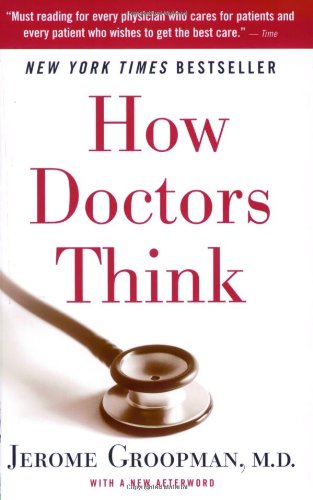
Dr. Jerome Groopman, internist and author of the excellent book, How Doctors Think, writes about how he teaches medical students to “don’t just do something—stand there.” Very few situations in medicine require immediate action. It may be uncomfortable to apply the tincture of time as a treatment, and many doctors find it easier to order a test than to discuss the pros and cons of the test with a patient.

However, we need to remember our first principle, primum non nocere: first do no harm. Dr. Abraham Verghese writes about the importance of restraint and self-awareness in his novel, Cutting For Stone. Here is the protagonist, a doctor himself, speaking about his father:

My father, for whose skills as a surgeon I have the deepest respect, says, "The operation with the best outcome is the one you decide not to do." Knowing when not to operate, knowing when I am in over my head, knowing when to call for the assistance of a surgeon of my father's caliber--that kind of talent, that kind of "brilliance," goes unheralded.

Doctors: think carefully. Engage in thoughtful discussion with your patient, and decide together what’s best for him. Remember that no testing and no treatment may be the best course of action.

If you have to do something, consider a novel treatment that Dr. Aaron Stupple coins “a listening infusion.” During his internship, Dr. Stupple faced resistance when he questioned his supervisors on the necessity of costly tests and invasive treatments. As the most junior person on the team, he couldn’t override their decisions, but he could add his own treatment. He made it a routine to visit patients and talk to them, often staying hours after everyone else to finish his “listening infusion”. He didn’t obtain more test results, but somehow he knew more about his patients than anyone else. He didn’t give them a pill, but somehow his patients felt better at the end of the day.

This is what doctoring should be about. A recent study of resident doctors found that only 12% of their time was spent interacting with patients, versus 40% interacting with the computer. The doctor may find everything about a person’s laboratory tests, but nothing about her family or values. “Personalized medicine” and “patient-centered care” are hot buzzwords, but it’s not just about finding someone’s DNA and redoing the waiting room area. Improving medical care must begin with personalizing care to the patient and listening to her story.

We must bring back the art of medicine and the art of healing, and treat all of our patients with a “listening infusion”. Then, “don’t just do something—stand there”! Changing any deeply-entrenched culture is hard, but it can happen: one doctor at a time, one patient at a time.

On July 1st, four years ago, I walked through Mass General and Brigham & Women’s Hospitals with an odd mixture of fear, relief, and excitement. Now, as I leave the hospital after my last shift of emergency medicine residency training, I am filled with a similar hodgepodge of emotions and reflections.

#1. “You were terrified of being a doctor!” I mentioned this article to the attending who oversaw my first shift as a newly-minted doctor. That day is forever etched in my mind; did he remember it? Much to my great embarrassment, he chuckled and said, of course. “I kept telling you not to worry if you don’t know something, but you were scared of everything!”

Though I knew that I was there to learn, it took me a while to get over my insecurities about not knowing so that I could focus on learning. And the learning was everywhere—on every single shift, I learned from great clinicians not just about diagnosis and treatment, but also important lessons on how to lead a team, how to teach, and, most importantly, how to help people who come to us in their time of need. I’ve been incredibly fortunate to have learned from many colleagues along the way, including the amazingly skillful and compassionate nurses at Brigham & Mass General. As my mentors say, it is called the practice of medicine for a reason, and we should embrace, rather than fear, the learning.

#2. “Mistakes will happen.” Every doctor has made a mistake some time in her life. Whether it’s a technical error (i.e. inserting a long IV into an artery rather than a vein), a systems error (i.e. ordering a medication for the wrong patient), or a communication error (i.e. angering a patient or colleague), all of us graduating residents will have made some kind of error. I myself made all three of these errors, and more.

With the volume of patients we will see throughout our careers, being the cause of medical error and interpersonal conflict is a terrifying and humbling thought. A wise physician said to me that just as residency is the time to learn how to practice medicine right, it’s also the time to learn skills like how to disclose mistakes to patients, and how to deal with conflict. “Don’t shy away from difficult situations,” he told me. “Put yourself in the middle of them to see what others do, and then develop your own style.”

#3. “That man has a name, and it’s not ‘the chest pain in room 8.’” As busy residents with long to-do lists, we often fall prey to the tendency to dehumanize our patients and brand them as chief complaints to quickly decide their disposition. On the surface, this might appear to save time, but dig a little deeper, and such algorithmic, depersonalized medicine results in unnecessary tests, misdiagnosis, and worse patient experience.

Furthermore, practicing cookbook medicine is not why we chose to become doctors. My work became much more meaningful when I made a commitment to connect with each patient, no matter how busy I am. I learned that the “old guy with dementia” was a world-renowned philosopher, that the “the onc patient with fever and neutropenia” had ten children with her preschool sweetheart. As physicians, we are privileged to hear so many stories from so many people. Cherish this gift we’re given to share in our patients’ rich lives. Our healthcare system isolates patients and disenfranchises families; we have the power to practice real patient- and family-centered medicine.

#4. “Residency is hard, and you have to take care of yourself.” My best friend from medical school, who had just completed his pediatric residency, warned me about this before I started intern year. How right he was. Work hours may have improved since our forefathers trained, but residents still work a lot and are exposed to high-stress situations with life-and-death consequences. Studies have shown that rates of depression and burnout increase sharply during training, yet the “hidden curriculum” of medical training still favors bravado over openness. Residents are taught to “suck it up” instead of talking about difficult situations and taking care of ourselves.

This is not the way it has to be! I learned this lesson the hard way during second year of residency, when my mother died. I suppressed my emotions rather than seek help, and saw how easy it is to feel isolated. Fight this impulse and stay connected. Find peers you can reflect with and openly speak about your experiences. Nourish the other people in your life and recognize their critical role in helping you through this process. For me, it was my wonderfully supportive husband and my friends who sustained me and kept me grounded. Make time for these people in your life. I cannot think of anyone who regrets the time spent with our loved ones and laments, “if only I spent that day reading one more research article!”

#5. “Emergency medicine is a phenomenal field.” The first grand rounds lecture I heard as an intern was by Dr. Larry Weiss, then President of AAEM. He spoke about how emergency medicine is an ideal specialty for advocacy: as the frontlines of medical care who interact with every aspect of the healthcare system, we are the most well-positioned physicians to advocate for our patients, our communities, and our society. We see the problems with public health—smoking, obesity, gun violence, etc. We see the problems with under-, over-, and misutilization of healthcare. And we have the ability and power to act on these problems every day.

In my fourth year of medical school, I selected emergency medicine as a specialty because I wanted the ability to treat any patient, anywhere. Being one of the emergency providers who took of care victims of the Boston bombings made me grateful for my training and for the skills I’ve learned along the way. We in emergency medicine have the incredible opportunity to utilize our training to do what we love while making a difference to improve care for our patients and to transform our healthcare system.

What else can I say about these last four years? It’s been a rollercoaster ride. Now that I’m about to embark on the next journey as an emergency medicine attending physician, health policy professor, and Director of Patient-Centered Care Research at the George Washington University in D.C., I am filled with exactly the same emotions of fear, relief, and excitement that I came to Boston with. I have learned so much from so many incredible people along the way, and will forever be indebted to the amazing attendings, residents, nurses, physician assistants, and other colleagues at Brigham & Mass General Hospitals.

Now, what will the next years bring? I’ll be on leave for the next month, but stay tuned for more dispatches and reflections, soon to be from the nation’s capitol.


This is a special guest post from contributor Krisca Te.


When the time comes to move a loved one to an assisted living facility (ALF), it can be an emotional period for everyone involved. While it’s undoubtedly the right thing to do when they are no longer capable of living on their own, it is inevitable that some negative feelings will surface. 


On your own end, there may be feelings of guilt that you aren’t taking your parent or grandparent in yourself, while for them it means the beginning of the end of their independent lifestyle and will require some pretty big adjustments.


I experienced this firsthand when the time came to move my grandma to an ALF. She had always been very active and independent; she loved playing golf on the weekends, meeting up with friends for bridge games and hosting elaborate dinner parties.


However, as she got older, it gradually became more and more difficult for her to climb up and down the stairs and get around the rather large home where she lived alone. On one occasion she suffered a fall and injured her ankle; luckily it wasn’t too serious, but it did lead us to reevaluate her situation.


When we brought it up with her, she was naturally very distraught at the thought of leaving her home and insisted that she would never move to an ALF where as she put it “everyone was just waiting to die.”


Eventually we suggested that she come along and have a look at some of the places in our area, just to get a feel for what they were like.


Once she saw the facilities, met some of the residents there and talked to the staff, she actually began to warm up to the idea of moving to a smaller place where she would have more help, and also more opportunities for socializing. 


She has since moved to an assisted living facility nearby and although it certainly hasn’t been an easy process for her, she has managed to readjust and is still enjoying most of the same activities she did when she lived in her own home.


I’ve learned that although you can’t change your loved one’s circumstances, there are things you can do to help them through the transition. The most important thing you can do is to simply be there for them and give them your support when they need it.


The following are some of the things that helped in our situation, and hopefully they will be helpful to others as well.


1. Deal with any feelings of guilt first. If you’re feeling guilty about placing your loved one into assisted living, it’s important that you are able to work through those feelings before you move forward as these feelings could negatively influence your loved one’s transition period.


Keep in mind the reasons why you initially decided that moving your parent or grandparent to an ALF was the right move and remember that it will benefit their health and well-being.


2. Talk through any concerns well in advance. If your loved one has any concerns about the move or about what will happen to their current home or belongings once they move, it is important to go over these concerns long before you being any other preparations. Find out what they are worried about and then work towards coming up with solutions that will put their mind at ease.


3. Visit the ALF with them a few times before the move takes place. Most of us are more afraid of what we don’t know than what we do, so taking your relative to visit the facility and acquaint themselves with the grounds, staff and amenities can do a lot to ease their worries and help them adjust more quickly.


Go to a few meals, talk to other residents and familiarize yourselves with the grounds and layout of the facility so that your loved one knows what to expect.


4. Keep in touch as much as possible. During the first few months or even year of your loved one’s transition into assisted living, they will likely be feeling vulnerable and insecure in their new surroundings. Knowing that they can count on your support can go a long way in helping them to adjust. Make regular visits and when you can’t come in person, be sure to phone them or send a little note so that they know they haven’t been forgotten.


5. Help them make new contacts and get involved with activities. Elderly people can often become shy when placed in a new environment and may turn down suggestions of activities or social gatherings. However, getting involved with others in their community and making new contacts is an important part of the adjustment process.


If they seem reluctant to participate, try accompanying them to some of the planned activities and gatherings so they don’t feel too intimidated. There is bound to be some activity your loved one is interested in, whether it’s art, book clubs or music lessons.


6. Don’t coddle. Showing support is important, but make sure you give your parent or grandparent the space to be independent as well.


In the first few days, for example, you may want to visit every day to make sure they know you haven’t abandoned them, but as time goes on, it’s better to space the visits out a bit more so that your loved one doesn’t become too dependent on you.


7. Set up their new living space with familiar furnishings and personal effects. Most elderly people are quite attached to their belongings, and parting with them can be very stressful. Obviously, they will be moving to a smaller environment, so not everything can be moved with them, but incorporating as many of their favorite objects like armchairs, beloved knickknacks and photographs can give the new place a familiar feel.


8. Form good relationships with the staff. You may not always get straight answers from your loved one about how they are doing and whether or not they are adjusting well into their new home, so forming good relationships with the staff can help you stay better informed of their progress and any issues there may be.


Krisca Te works with Open Colleges, Australia's leading provider of TAFE courses equivalent and aged care training. When not working, you can find her on Google+ or spends the day with her baby boy.

What’s wrong with the following picture?

Two medical researchers at a major academic center collaborate to study disease X. They come up with the research question, design the project, obtain grants, and collect data. Their results are published in a scientific journal and presented at several medical conferences. Based on this first study, the researchers start another cycle of idea generation, data generation, and publication.

I presented this scenario to three Harvard medical students working with me in the ER. They all looked at me blankly. “I don’t get it,” one of them said. “Isn’t this the way research is done?”

That’s exactly the problem. This is “traditional” research, and traditional research leaves out one critical stakeholder: the patient. 

A few weeks ago, I had the honor of participating as a member of PCORI’s inaugural advisory panel on patient engagement. PCORI is the Patient-Centered Outcomes Research Institute, and is a new federal institute mandated to figure out how to meaningfully involve patients in research.

Some may argue with the necessity of such an institute. After all, isn’t research ultimately done to help patients? While grants and publications advance careers, few researchers go into such grueling fields to make money or gain fame. Isn’t research already serving the public good, which by definition is patient-centered?

But here’s another way to think about it. In “traditional” research, patients are subjects. Their sole purpose is to participate in research trials, and the extent of their decision-making is confined to whether to participate in the trial (let’s set aside, for now, the many throughout history who were subject to research against their will). Very rarely, if ever, do patients participate in the research design, data analysis, or result dissemination. Very rarely, if ever, do patients initiate the research and envision the research question itself.

Yet isn’t it the patient—the one with the disease—the most knowledgeable about what needs to be studied and how? No doubt, the researcher has irreplaceable expertise; but isn’t the patient also a vital partner in the process?

In this era of healthcare reform where the patient is finally recognized as a necessary stakeholder, the creation of PCORI is an attempt to shift the paradigm of how medical research is done. Rather than having patients as invisible, nameless subjects, PCORI requires them to be involved in the research design from the very beginning. Patients are expected to be equal partners in deciding what projects to fund and figuring out how to design studies with a patient-centered focus. They are expected to help figure out what’s important to study, and how to get out the results beyond the realms of scientific meetings and medical journals.

Much about this “new” concept of medical research is common sense. Most would agree that precious time and tax dollars should be devoted to what really matters to people. Yet, this paradigm shift is such a departure from traditional research that it is not without its doubters. Researchers not used to involving patients question whether they would be sophisticated enough to understand the research process. Patients, too, doubt whether they have the expertise required. Fueling this is mutual mistrust: will this new patient-centered approach derail existing research? Will patients end up being “used” for some nefarious ulterior motive?

As part of PCORI’s outreach efforts, it solicited applications for 4 advisory panels. Over 1,000 people applied—many of whom are representatives of patients and patient groups. Twenty-one of us were selected for the advisory panel on patient engagement, and met over two days in Washington D.C.

While many of us are optimistic and excited about the potential of PCORI, we also raised several questions, including:  

* How can researchers switch their mentality to become patient-centered such that they are not just simply checking a box to affirm that yes, patients are involved?

* How can PCORI itself ensure that it adheres to its goal of “research done differently” and go really tackle the concept of patient-centeredness?

* While it is admirable that PCORI has taken great strides to involve many patient advocacy groups, these groups represent only a small portion of patients. How can PCORI go beyond hearing the loudest voices—many of whom may also have their own motives—and really engage people?

* How will PCORI address issues neglected in traditional research that are vital to our healthcare, such as preventive medicine?

* How will PCORI really engage people around the country to come up with research questions and redirect priorities?

Recognizing that there is a fundamental problem with the traditional conduct of research is a critical first step to making change. PCORI has opened a door that’s been shut for far too long. It is now up to all of us—as physicians, researcher, and most of all, as patients—to ensure that medical research, and medical care, focuses on and originates from the patient.